How transnational adoption facilitated the sale of children
The Flemish government is putting a definitive end to transnational adoption. Yet not everyone understands why. This is because there is a lack of a broad societal dialogue here regarding the malpractices of the past, argue three researchers. Abroad, investigative commissions concluded that transnational adoption systematically involved the sale of children. Because Flemish adoption agencies collaborated partly with the same government agencies and orphanages, these results are relevant here as well.
Adoptions Top
In 2019, the Flemish Government appointed an expert panel to investigate malpractice in the transnational adoption system. They conclude that the system is demand-driven. Adoption services are encouraged to actively search for adoptable children by establishing new partnerships with countries of origin. As a result, there is a significant risk that children end up in the adoption system unjustly.
After several problematic adoption cases from Ethiopia were identified, the Flemish Centre for Adoption (VCA) called on people in 2023 to report suspicions of malpractice . By March 2026, the count stood at 241 reports . These are currently being investigated in collaboration with local partners in the countries of origin.
There is a high risk that children end up in the transnational adoption system unjustly.
Although a step forward, these remain individual cases. Consequently, the structural problem is neither named nor acknowledged. Minister Caroline Gennez (Vooruit) did do so when, in April 2026, she for the first time acknowledged structural malpractice in the transnational adoption system with an adoption freeze .
Public debate on malpractice
This halt cannot count on universal support. It is perceived by some prospective and adoptive parents as abrupt and unfair . This is partly because a broad societal discussion regarding malpractice in transnational adoption is lacking. On the contrary, adoption agencies and regulatory bodies have denied the malpractice for too long or minimized it to individual cases.
Following the adoption freeze, a period of recovery is now beginning. The truth is paramount in this process. Flemish society has a right to it. How did transnational adoption facilitate child trafficking? How many files of adoptees in Flanders contain traces of malpractice? How many adoptees were unlawfully separated from their parents in their country of origin?
Malpractices are not an exception in the transnational adoption system. They are inherent to it.
At the federal level, the Chamber already called last year for a historical investigation into malpractice in Belgium between 1960 and 2005. Pending this investigation, we consider it the duty of the Flemish Government to inform the population about what we already know thanks to foreign investigative commissions.
In recent years, large-scale independent investigations have been conducted in the Netherlands, Switzerland, France, and South Korea, among others. They conclude unequivocally that malpractice is not an exception in the transnational adoption system; it is inherent to it. Since the start of transnational adoption, children's rights have been violated on a large scale to fulfill the desire of prospective adoptive parents.
Relevant for Flanders
Why are these foreign investigations relevant to Flanders? We see in the Swiss, Dutch, and French reports that structural malpractice and irregularities are identified in numerous countries of origin, countries with which Flanders has also collaborated.
Moreover, serious abuses came to light in countries such as South Korea, Ethiopia, and Guatemala. Lawsuits and convictions followed in connection with fraudulent adoptions. During the same period, adoptions from these countries to Flanders also took place.
Let's zoom in on the mechanisms of child trafficking.
Let us therefore zoom in on the mechanisms of child trafficking that these commissions exposed. The investigations describe how children were systematically and unlawfully orphaned, how first parents were falsely accused of neglect, how consent was forged or circumvented, and how parents signed relinquishment documents under pressure.
For decades, adoption agencies and those responsible in the adoption landscape hid behind the 'best interests of the child', while in reality they primarily wanted to feed the international demand for adoptive children. Through quotes from the reports, we show how this worked in practice.
What we mean by 'child trafficking'
To interpret the insights from the reports, we must first explain how child trafficking and the sale of children are legally defined. The United Nations Palermo Protocol defines child trafficking as the “recruitment, transportation, transfer, harboring or receiving of children for the purpose of exploitation”.
In transnational adoption, the final element of the definition—exploitation—is often a subject of debate. Adoptive parents and actors in the transnational adoption system rarely had the intention to exploit adopted children, although it does occur in exceptional cases. Therefore, reports distinguish between child trafficking and the sale of children. While the former is difficult to prove, the sale of children has been widely established in transnational adoption.
The sale of children has been broadly established.
What do we understand by 'sale of children'? The Optional Protocol to the UN Convention on the Rights of the Child defines the sale of children as “any act whereby a child is transferred by anyone to another person or group for payment or any other benefit.”
In a 2016 report , the UN Special Rapporteur on the Sale and Sexual Exploitation of Children, Maud de Boer-Buquicchio, identified four practices as illegal adoption and classified them as the sale of children. De Boer-Buquicchio derives the first two mechanisms directly from the Optional Protocol to the UN Convention on the Rights of the Child: (1) no informed consent from both first parents, or consent obtained under coercion, deception or false promises, and (2) financial gain for intermediaries (adoption agencies, clinics, lawyers or public officials).
Read also
 Adoptees themselves indicate that we should stop transnational adoption. Surely that is a clear signal?
In addition, De Boer-Buquicchio mentions additional mechanisms, such as (3) violation of the principle of subsidiarity: serious efforts were not made to find care in the child's own region before international placement was considered, and (4) forgery or identity fraud: false orphan registrations, replacement of children, or the deliberate concealment of the child's origin.
When these elements appear in adoption files, together or separately, the UN therefore does not speak of an irregularity or administrative error, but of the sale of children. The various independent transnational adoption inquiry commissions each demonstrate separately that all these elements were systematically present simultaneously in multiple countries over decades.
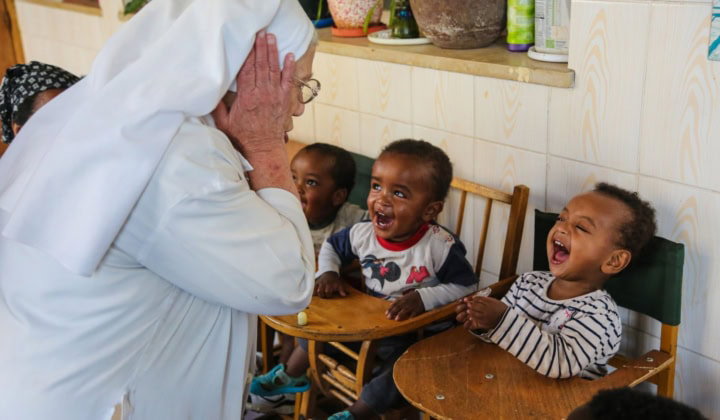
For decades, adoption agencies and those responsible in the adoption landscape hid behind the 'best interests of the child,' while in reality, they primarily wanted to feed the international demand for adoptive children.
© Pexels / G Media Malta
South Korea: Adoption organizations sideline biological parents
The four reports we will discuss are different in nature. In South Korea, a Truth and Reconciliation Commission was appointed to investigate the mass reports of human rights violations.
South Korea sent approximately 140,000 children abroad between 1950 and 1999. In 2022, 367 adoptees from eleven countries filed a complaint with the National Truth and Reconciliation Commission. They alleged that they had been falsely registered as orphans.
Adoption organizations systematically falsified documents.
After nearly three years of investigation, the commission confirmed in 2025 that adoption organizations had systematically falsified documents with the tacit complicity of the state. “Adoption organizations could send any child abroad for adoption without the consent of the biological parents or family members, by falsely registering the child as an orphan and subsequently granting consent directly themselves,” the report states.Truth and Reconciliation Commission of Korea, (2023), Decision on Intercountry Adoption: Systematic Violations of Adoptees' Rights, Seoul, Truth and Reconciliation Commission of Korea.
In international adoption law, consent is considered the cornerstone of ethical adoption. However, the South Korean case demonstrates how this principle was systematically circumvented, not only by forging consent, but by rendering it legally superfluous. Through legal loopholes, adoption agencies were able to have themselves appointed as guardians of the child. Once they fulfilled that guardianship role, they could themselves grant the consent that normally belongs to the parents.
Netherlands: Surrender under duress or deception
Our northern neighbors discovered the active involvement of the Dutch government in malpractice rather by chance. When the Ministry of Justice responded to an archive request from an adoptee from Brazil in 2017, it turned out that its own government officials were involved in illegal adoptions.
Subsequently, a parliamentary inquiry committee was appointed. The committee, chaired by Tjibbe Joustra, concluded in 2021 that the government had looked away for decades and was itself part of the system it was supposed to oversee.
“The adoption decision was often made under social pressure or coercion. In addition to extreme forms of child theft or kidnapping, children were also relinquished by making false promises to the birth family or having them sign documents they did not understand,” we read in the report. “The intercountry adoption system itself functioned in some cases as a ‘child whitewashing’ mechanism because it could convert children offered for adoption under suspicious circumstances into legitimately adopted children.”
Parents who signed such documents often did not understand what they were signing.
In many countries of origin, permanently relinquishing a child via a signature is not a culturally ingrained practice. It is a European transactional logic: a scribble on paper that seals the irrevocable transfer of a child. Parents who signed such documents often did not understand what they were signing. Not only because the documents were drawn up in a foreign language, but because the concept itself—permanently transferring one’s child through an administrative act—had no cultural significance.
Adoption organizations and their intermediaries operated in contexts of extreme poverty and social exclusion, presenting parents with documents whose permanent legal consequences were never explained to them. False promises did the rest. Parents were told that their child would be temporarily cared for, that they would return, and that contact would remain possible. Once the signature was affixed, the system did the rest: children offered for adoption under suspicious circumstances were converted into legitimately adopted children through successive administrative steps.

In many countries of origin, permanently relinquishing a child via a signature is not a culturally ingrained practice. Parents who signed such documents often did not understand what they were signing.
© Pexels / Thirdman
Switzerland: Support within own network not investigated
Switzerland started with an apology for Sri Lanka and ended with a much greater recognition. Earlier investigations had revealed that Swiss authorities had turned a blind eye when they were presented with incomplete or falsified documents regarding the adoption of babies from Sri Lanka. The Swiss government offered its apologies for this in December 2020.
But the question arose: was Sri Lanka an exception, or the tip of an iceberg? Archival research revealed that illegal practices were visible in all ten investigated countries of origin: Bangladesh, Brazil, Chile, Guatemala, India, Colombia, Korea, Lebanon, Peru, and Romania.
The principle of subsidiarity requires that transnational adoption only be considered when all care options in the country of origin have been exhausted. In practice, this proved to be a formality. Swiss archival research shows that Swiss representatives in the countries of origin rarely took existing family or community structures into account.
Grandparents, uncles, aunts, and neighbors were not seen.
Grandparents, uncles, aunts, neighbors: the fabric of care that supports the upbringing of children in many countries of the Global South was not seen. “This meant that the possibility was overlooked that a local kinship network or an extended social environment existed that, with the right financial support, could have raised the child in question,” the researchers write in their report.
Applying the principle of subsidiarity requires time, resources, and local knowledge. Transnational adoption was faster, more lucrative, and met a concrete demand from the West. As a result, the best interests of the child gradually faded into the background, and the interests of the prospective adoptive parent became the silent driving force of the system.
On January 29, 2025, the Swiss federal government took the decision in principle to completely end international adoption, based on the conclusion of an independent expert group that even a thoroughly revised legal framework cannot rule out abuse. However, the Swiss parliament later that year spoke out against a legal ban .
France: Always aware of malpractice
France is the only country where the initiative for an investigation came not from politics, but from science.
Read also
 The impact of adoption doesn't stop once you're an adult.
In 2021, historian Yves Denéchère made disturbing findings based on archival research : the actual number of adopted children was 20 to 25 percent higher than the official statistics. Most of the extra children entered the country without an adoption visa. Reports of illegal practices proved to be numerous, recurring, and widespread.
Diplomatic correspondence from Guatemala, Nepal, El Salvador, Sri Lanka, and Vietnam shows that French diplomats on the ground were aware of illegal practices as early as at least the 1980s. They reported on them. The information reached Paris. And yet nothing changed. “Particularly in Peru and Brazil, all those involved in the international adoption process were aware of the illegal practices taking place within it. They could therefore not have been unaware of the risks of criminal offenses associated with international adoption.”
The demand for adoptive children from France was high, the pressure on countries of origin real, and the financial interests of intermediaries considerable.
The French report argues that the passive attitude can be explained by interests in the adoption market. The demand for adopted children from France was high, the pressure on countries of origin real, and the financial interests of intermediaries substantial. Intervention meant disrupting that market. The fact that the government was simultaneously the implementer and controller of the system made enforcement structurally unlikely.
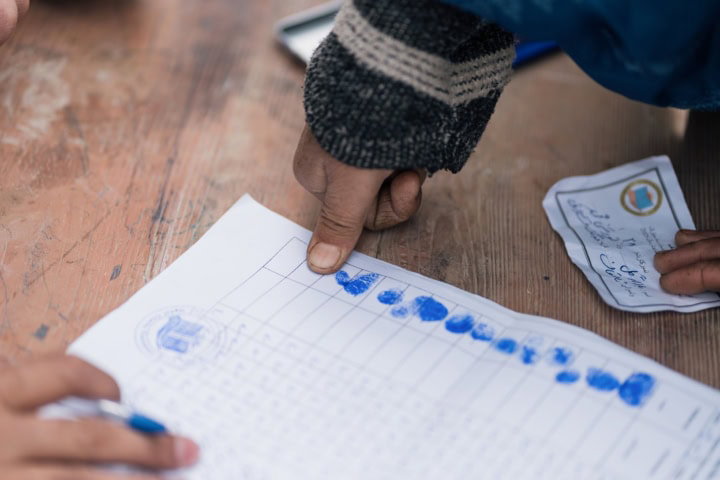
French diplomats in the countries of origin were aware of illegal practices since at least the 1980s. They reported on them. The information reached Paris. And yet nothing changed.
© Pexels / Faruk Tokluoğlu
Child money laundering
What the reports collectively expose is not a series of national scandals. They reveal a systemic problem with transnational adoption. The illegal practices were not an unwanted side effect of an otherwise healthy system. They were the lubricant that kept the system running.
That system has always operated in a grey zone where legality and illegality merged. Children declared adoptable were rarely true orphans. Other reasons had to be invoked to justify their separation from the family.
In this regard, the four mechanisms that qualify an adoption as the illegal sale of children by the UN repeatedly surface in the reports. To begin with, informed consent was not structurally guaranteed. The committees found evidence of falsification and circumvention. Moreover, financial gain for intermediaries created incentives to declare children adoptable who were not.
The illegal practices were not an unwanted side effect of an otherwise healthy system. They were the lubricant that kept the system running.
The principle of subsidiarity was also not structurally adhered to. The West requested a faster and more lucrative response to the demand for children, resulting in insufficient investment in seeking local care options. Furthermore, document forgery was an instrument to legalize all of the foregoing. The independent commissions call this, each in their own words, a form of child money laundering.
A combination of factors ensured that this system continued to operate for decades. These included: poverty and ignorance among first parents, the inadequate development of local care systems, the high costs that encouraged corruption, the stigmatization of single mothers and marginalized communities, and the tendency of governments and adoptive parents to bury their heads in the sand. In a global context characterized by inequalities and profiteering, this is a system that cannot be remedied.
Flanders deserves its own research
Despite the evidence provided by these reports, Flanders also deserves its own truth and reconciliation commission. In this regard, we can learn from Denmark, where a university investigative commission was appointed. Denmark is not only investigating individual complaints but is scrutinizing the entire system in seventy countries.We are involved as research partners in that Danish study of the transnational adoption system in Bolivia and Nepal.
Adoptees, first parents, and adoptive parents have a right to the truth.
Adoptees, first parents, and adoptive parents have a right to the truth. They deserve extra support in acknowledging, accepting, and processing the impact of this devastating history on their lives.