Study on forced adoptions in East Germany reveals disproportionately harsh interventions by youth welfare services
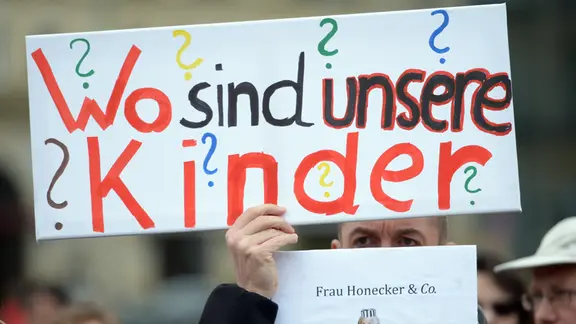
According to a new study, many child removals in East Germany were carried out with disproportionate harshness and were part of the systemic injustice. However, a systematically politically controlled approach or targeted involvement of the Stasi could not be proven. Ideology strongly influenced the actions of the youth welfare services. Those affected continue to suffer the consequences to this day.
from MDR AKTUELL
A new study by the German Institute for Residential Care Research shows that many adoptions in East Germany were carried out with "excessive and disproportionate harshness." Of approximately 95,000 adoptions between 1945 and 1990, about eleven percent were attributed to particularly harsh interventions by youth welfare services. Around 10,450 cases, according to the study, arose from "everyday crises."
However, the research could not prove any politically planned or systematically controlled procedure. Neither targeted influence by the Ministry for State Security nor the systematic removal of children from politically persecuted parents could be demonstrated. According to the study, political loyalty also played no role in the selection of adoptive families in most cases.
Interventions were part of the "systemic injustice"
At the same time, the researchers emphasize that these interventions were nevertheless part of the "systemic injustice of the SED dictatorship." Youth welfare services frequently acted ideologically and classified parents as "antisocial" based on prejudice. According to the researchers, child removal also served to enforce socialist moral values and to discipline parents.
The term "forced adoption" originated in the 1960s during the Cold War and later became a collective term for various forms of state intervention. According to the study authors, it remains important for those affected to be able to talk about the suffering they experienced. The full study, involving several universities, is scheduled for publication this summer.
study on forced adoptions in East Germany reveals disproportionately harsh interventions by youth welfare services
Laut einer neuen Studie sind viele Kindesentzüge in der DDR mit unverhältnismäßiger Härte erfolgt und waren Teil des Systemunrechts. Ein systematisch politisch gesteuertes Vorgehen oder eine gezielte Beteiligung der Stasi ließ sich jedoch nicht nachweisen. Ideologie prägte das Handeln der Jugendhilfe stark. Betroffene leiden bis heute unter den Folgen.
Eine neue Studie des Deutschen Instituts für Heimerziehungsforschung zeigt, dass viele Adoptionen in der DDR mit "übertriebener und unverhältnismäßiger Härte" erfolgten. Von rund 95.000 Adoptionen zwischen 1945 und 1990 seien etwa elf Prozent auf besonders harte Eingriffe der Jugendhilfe zurückzuführen. Rund 10.450 Fälle entstanden demnach aus "alltäglichen Krisen".
Ein politisch geplantes oder systematisch gesteuertes Vorgehen konnte die Forschung jedoch nicht belegen. Weder eine gezielte Einflussnahme des Ministeriums für Staatssicherheit noch eine systematische Wegnahme von Kindern politisch verfolgter Eltern ließ sich nachweisen. Auch bei der Auswahl von Adoptivfamilien spielte politische Loyalität laut Studie meist keine Rolle.
Eingriffe waren Teil des "Systemunrechts"
Gleichzeitig betonen die Forscher, dass die Eingriffe dennoch Teil des "Systemunrechts der SED-Diktatur" waren. Die Jugendhilfe habe häufig ideologisch gehandelt und Eltern aufgrund von Vorurteilen als "asozial" eingestuft. Kindesentzug diente demnach auch der Durchsetzung sozialistischer Moralvorstellungen und der Disziplinierung von Eltern.
Der Begriff "Zwangsadoption" entstand in den 1960er Jahren im Kalten Krieg und wurde später zu einem Sammelbegriff für verschiedene Formen staatlicher Eingriffe. Für Betroffene ist es den Studienautoren zufolge bis heute wichtig, um über erlebtes Leid sprechen zu können. Die vollständige Studie, an der mehrere Universitäten beteiligt sind, soll im Sommer veröffentlicht werden.