Adoptees themselves indicate that we should stop transnational adoption. Surely that is a clear signal?
In their book '(Un)wanted: The Complex Reality Behind the Adoption Fairytale', Ae Ra Van Geel and Kiran Van der Avert describe the often conflicting interests and emotions that adoption entails. Although the end of transnational adoption seems near, they view a definitive adoption freeze as merely the beginning. “The impact of adoption does not stop when you arrive in our country and end up in the adoptive family here.”
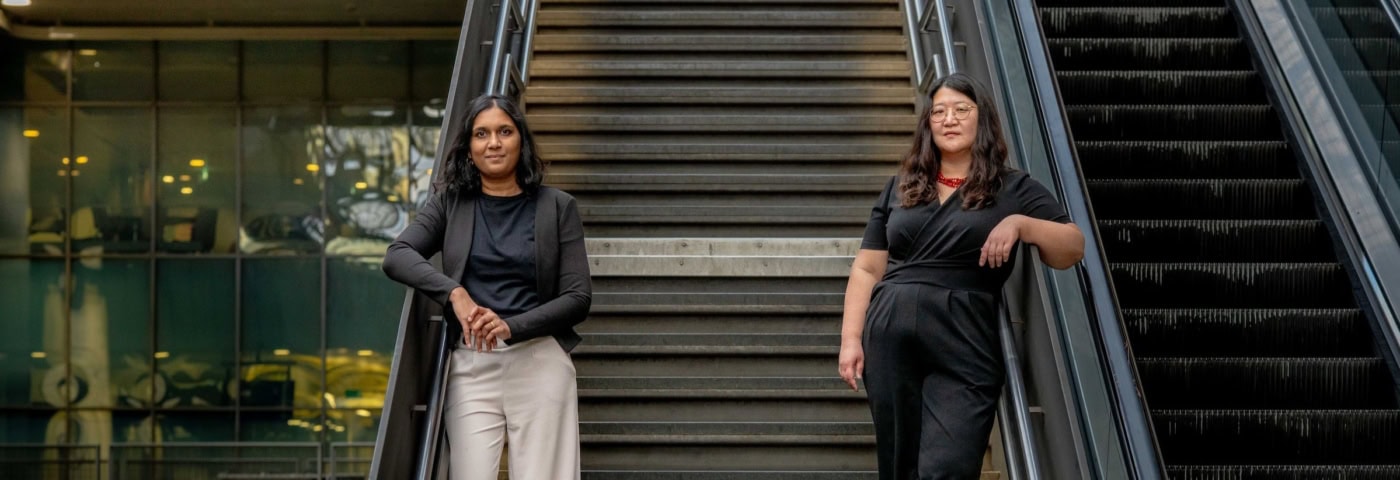
© ID / Sebastiaan Franco
At least 23,000
Today, there are at least 23,000 transnational adoptees in our country – we do not know the exact number because the number of adoptions has only been properly recorded in recent years. Many of them need help. They have questions about their origins, family, relationships, and identity. They wish to travel back to their country of origin or face psychosocial challenges linked to their adoption, where current support services fall short.
“The impact of adoption does not stop when you arrive in our country. Children who have been adopted grow up, and you carry the consequences of adoption with you for your entire life,” says Kiran Van der Avert. She was adopted from India when she was eleven months old.
Adoption is profound and traumatizing.
“Adoption is accompanied by loss, mourning, and grief. By continuing to believe in the fairytale of transnational adoption, we fail to see that adoption is profound and traumatizing,” adds Ae Ra. She is a psychological counselor and often works with adoptees. She was adopted from South Korea when she was four months old.
In the book '(Un)wanted: The Complex Reality Behind the Adoption Fairytale', Ae Ra and Kiran describe these consequences in detail. The two highlight the various aspects of transnational adoption, its history, and the consequences for adoptees and their parents in a clear and accessible manner.
In the book, you focus primarily on well-being and the psychosocial impact of adoption. Why did you choose that approach?
Ae Ra: “There is very little knowledge about the impact of separation and adoption within the care sector. As a result, many incorrect diagnoses are made. Children, adolescents, and adults who have been adopted encounter challenges sooner or later. Care providers, teachers, or family and acquaintances view them as 'a difficult case,' but they do not stop to consider that the impact of adoption may be the underlying cause.”
Kiran: “My adoptive brother struggled with so much unseen and unacknowledged trauma. As his loved ones, we lacked the tools to deal with it, and there was no one who could guide and inform us. He eventually took his own life because he was so deeply entangled in his early childhood traumas. If only he and those around him could have read this book. The outcome might have been the same, but then he could have been a little kinder to himself and perhaps counted on more understanding.”
Which misconceptions about transnational adoption do you want to dispel?
Kiran: “There are many false assumptions about transnational adoption. One of them is the assumption that an adopted person was unwanted by their family in their country of origin. But is this really the case?”
Parents in vulnerable situations are often subjected to mental or financial pressure, and are sometimes lied to that their child is being taken away temporarily, without realizing exactly what adoption entails. Or they are falsely declared dead in the adoption files. There are also numerous adoptees who turn out to have been abducted.
Adoptees are taught very early on that they were 'unwanted' in their family in their country of origin. That is a thought that takes root stubbornly and weighs on how you view yourself as you grow up here. It is not for nothing that it is the title of our book. We are urged to forget our family as quickly as possible. When you do think of them and want to know who they are, a conflict of loyalty arises with your adoptive parents. 'Why would you want to know your parents over there if you have it so good here?' But both can coexist.
Adoptees are made aware very early on that they were “unwanted” in their family in their country of origin.
Ae Ra: “On the other hand, people think that the adopted child is automatically wanted in the new adoptive family. Nowadays, people rarely adopt out of charity; they do it more often to fill their involuntary childlessness. We would not be here if our adoptive parents could fulfill their wish to be parents naturally. With all due understanding for people who are involuntarily childless, how wanted is the adopted child then really?”
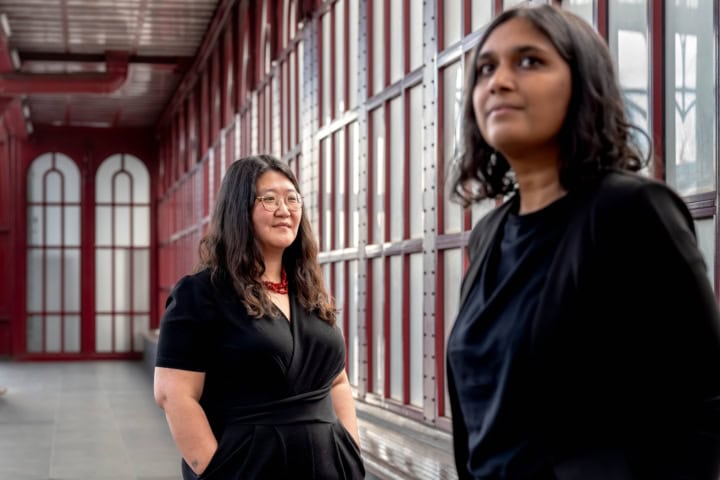
Ae Ra Van Geel (left): “Today, people rarely adopt out of charity anymore; they do it more often to fill their involuntary childlessness.”
© ID / Sebastiaan Franco
Culturally sensitive care is by now a well-known concept. In the book, you advocate for adoption-sensitive care. What does that look like according to you?
Ae Ra: “Adoption-sensitive care means being mindful of the consequences of adoption and relinquishment. Every adoption begins with loss: an adopted person loses not only their parents, but also their culture, language, and the smells and colors of their country of origin. The move to a completely different country has an enormous impact. Once we grow up here, we are confronted with questions of identity, but we also face racism, sometimes even within our own adoptive family.”
Kiran: “We need to talk about the impact of the separation between a mother and the child. We know by now how important the first thousand days are. Many adoptees were separated from their primary caregiver at a very young age. For such a young being, that is very traumatic. According to specialists, the grief that this young child experiences feels like dying.”
“As a society, we prefer to remain silent about that, because it gets in the way of the fairytale narrative. For a long time, people thought: the younger the adopted person, the better, because then they will remember less or have experienced fewer traumatic things. As long as there is enough love, everything will be fine. That is not the case.”
'If there is enough love, everything will be fine. That is not the case.'
Ae Ra: “According to new research, adoptees are 35 times more likely to attempt suicide than non-adopted people. They come into contact with mental health services twice as often and are overrepresented in addiction and hospitalization statistics. If you grow up in a family that is not your own, the risk of abuse and mistreatment is greater. These are simply the uncomfortable truths we have to discuss.”
How do you view the aftercare available to adoptees today?
Kiran: “It is very frustrating that there is hardly any proper aftercare. A country that facilitates adoptions continues to bear responsibility, even when the adoptees are here and becoming adults. It is up to them to provide structural psychological support for adoptees, but also for the adoptive family. This is a profound event for every family member, but the government is quick to wash its hands of it.”
Ae Ra: “Adoption claims to be a child protection measure, and that is a public matter. Something that therefore needs to be organized and monitored by the government. Foster care is also a child protection measure where – at least on paper – families and young people are monitored and supported. Because people still believe that adoption is all sunshine and roses, they do not stop to think that things can also go wrong in adoptive families.”
Why is there no adoption leave for adoptees who want to go on a roots trip?
Furthermore, aftercare is more than psychological counseling. Adoptees were forcibly relocated to a country on the other side of the world. If they want to search for their family or travel back to their country, no support is provided. Adoptive parents can apply for adoption leave. Why is there no adoption leave for adoptees who want to undertake a roots trip?
Until last year, adoptive parents could partially reclaim their costs for the adoption procedure through taxes. Which costs can adoptees claim for the search for their family, for legal assistance, for the psychological help they seek, or for the language courses they take to be able to communicate with their family?
It is striking that you consistently speak of 'parents' when referring to the 'original', 'first', or 'biological parents'.
Kiran: “We do that deliberately because we want to give them a full place when we talk about adoption. When a parent is separated from a child, they do not suddenly stop being the parent of that child. Not even if the child gets other 'legal parents' through adoption. Adoptees learn from childhood that the adoptive parents are the 'real' parents because they raise us and love us. That is well-intentioned, but it unfairly pushes the child's parents away.”
We want rehabilitation for our parents.
Ae Ra: “It is yet another myth that the biological bond between parent and child is subordinate to the parental figures who raise you. If it is merely some genetic material, why do so many adoptees feel the desire to know who their parents are? Donor-conceived children are also curious about who their father is, and those born via a surrogate mother also find it important to get to know that woman. That matters.”
“We want vindication for our parents. For their perspective is the least taken into account in the adoption sector. Once the adopted person arrives in their adoptive family, we view the bond with the family as a closed chapter. Yet they too have their questions, desires, and rights, even though these are grossly ignored by the adoption sector.”
That is why we speak of 'transnational' adoption rather than 'intercountry'. The latter wrongly creates the impression that countries are on equal footing and that cooperation is reciprocal. If that were the case, it would mean that children from our country are also being transferred for adoption to countries in the Global South. Due to structural power inequality between Western countries and the Global South, adoption from abroad is one-way traffic.
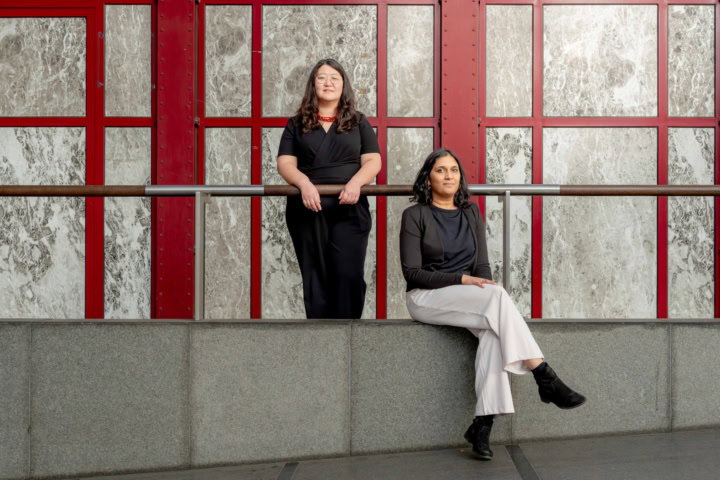
Kiran Van der Avert (right): “When a parent is separated from a child, they do not suddenly stop being the parent of that child.”
© ID / Sebastiaan Franco
Meanwhile, there is news: it seems that a decades-long history of adoptions from abroad is now coming to an end in our country as well.
Kiran: “I couldn’t believe it at first, but it really seems to be happening. People do talk mainly about the ‘careful guidance’ of prospective adoptive parents on the waiting lists who are now unsure if they will ever be able to adopt a child. No one had stopped to consider that this news concerns us, adoptees, as well.”
Stopping new adoptions from abroad is a first, necessary step. We are finally being heard.
Ae Ra: “I am cautiously optimistic. I am glad that there is finally a political consensus that we had better stop adoptions from abroad. Although many questions are arising about how they intend to achieve the adoption freeze and how long that will take. Stopping new adoptions from abroad is a first, necessary step. We have been campaigning for this for so long. Finally, we are being heard.”
If transnational adoption is primarily a child protection measure, aren't we abandoning many children in precarious situations by putting a permanent stop to it?
Kiran: “If we truly cared about those children, we would be better off spending the energy and resources currently going to transnational adoption on aid on the ground. That way, children could grow up with their own families first and foremost, and we wouldn't have to unnecessarily traumatize them by uprooting them from their family and cultural context at a young age. Adoption has never reduced child poverty in those countries.”
The conclusion after seventy years of transnational adoption is that adoptees, those ultimately concerned, themselves indicate that it is better to stop. That is a clear signal that adoption has produced more disadvantages than advantages. We would be better off ensuring proper support for the many adoptees who are already in our country today. Only in this way can we, as a society, somewhat rectify the historical mistake that is transnational adoption.