The good and bad journey home
Updated Apr 20, 2026 AT 7:02 AM
– The camera is the first thing that comes out and sees things. I feel like I see things through the camera.
Things are important to Anders. They have been defining for where he is now. In life. In South Korea.
What Anders had when he arrived in Norway was a change of clothes, a baby bottle, a pair of small Korean rubber shoes and some documents in a small blue travel bag.
The baby bottle Anders brought with him. Park was Anders' family name in South Korea.
- Photo: Private
The change of clothes.
- Photo: Anders Hyun Molvik Botnmark
Socks in the change of clothes.
- Photo: Private
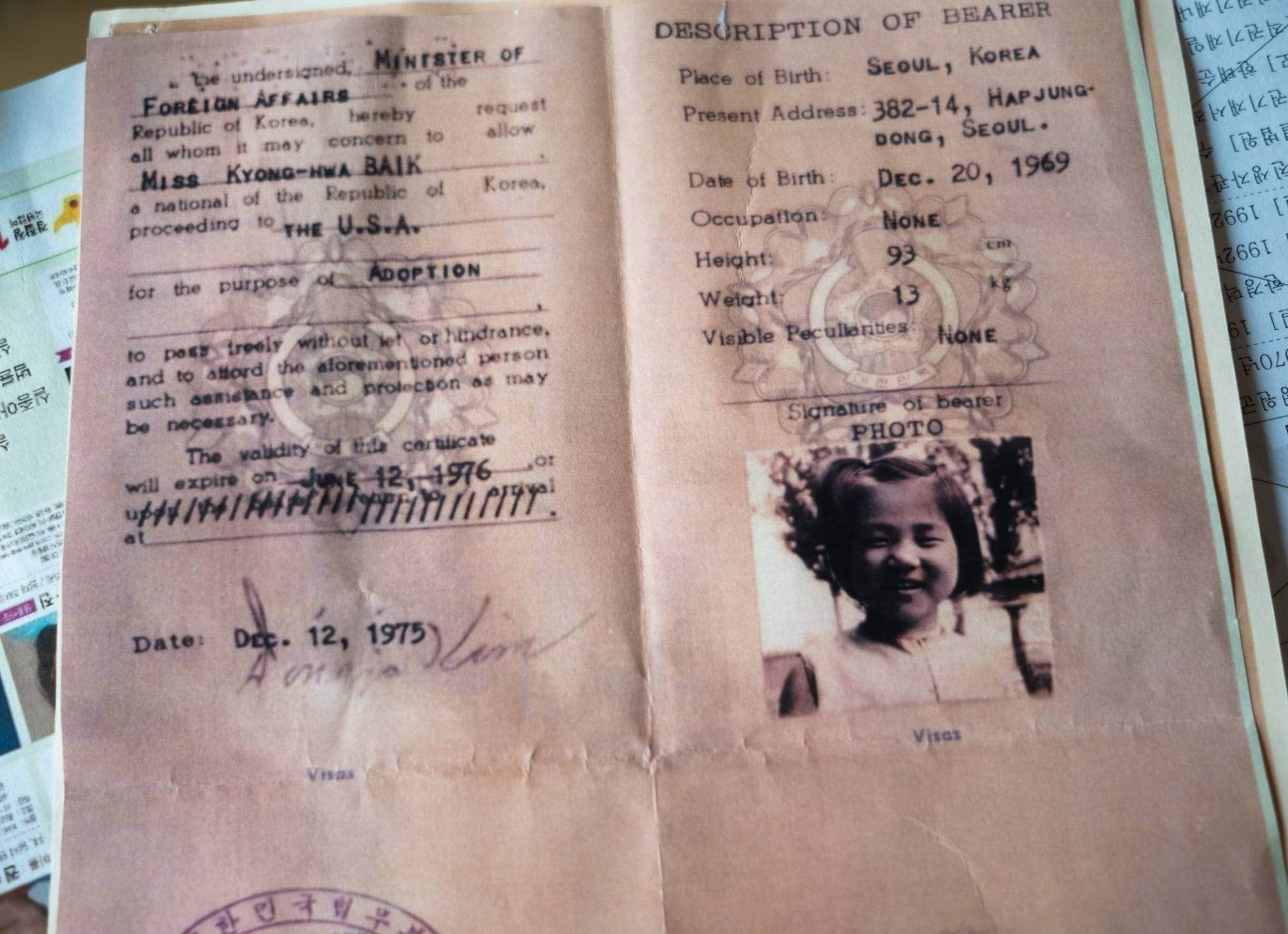
Anders' first travel document.
- Photo: Anders Hyun Molvik Botnmark / Private
The blue travel bag.
- Photo: Anders Hyun Molvik Botnmark / Private
→
– So he asked the simple question: Is this really all?
Anders Hyun Molvik Botnmark was 20 years old at the time. A very young adult. Mother Kristin Molvik Botnmark continues.
– Is it just this, like? And then I started trying to figure out what's outside of our family's history. What's the big story about what we're a part of?
Anders' question led to a parallel journey. While Anders began to explore his own identity, his mother began an examination of the facts and her own conscience.
The result is a book and a photo project.
From the end of the Korean War in 1953 to the present day, South Korea has given over 200,000 children for adoption abroad. The number may be as high as over 230,000.
The largest recipient countries are the United States with over 150,000 children, Denmark with 9,000, Sweden with 10,000 and Norway with 6,500.
Distributed by population, no country has accepted more children from South Korea than Scandinavia.
The traces of the homeland
In a small office in a hilly neighborhood just outside the center of Seoul, you hear pure Danish.
Peter Møller and Han Boonyoung examine documents. They were both adopted to Denmark but moved back to South Korea.
Now they work politically for the rights of adoptees and their families.
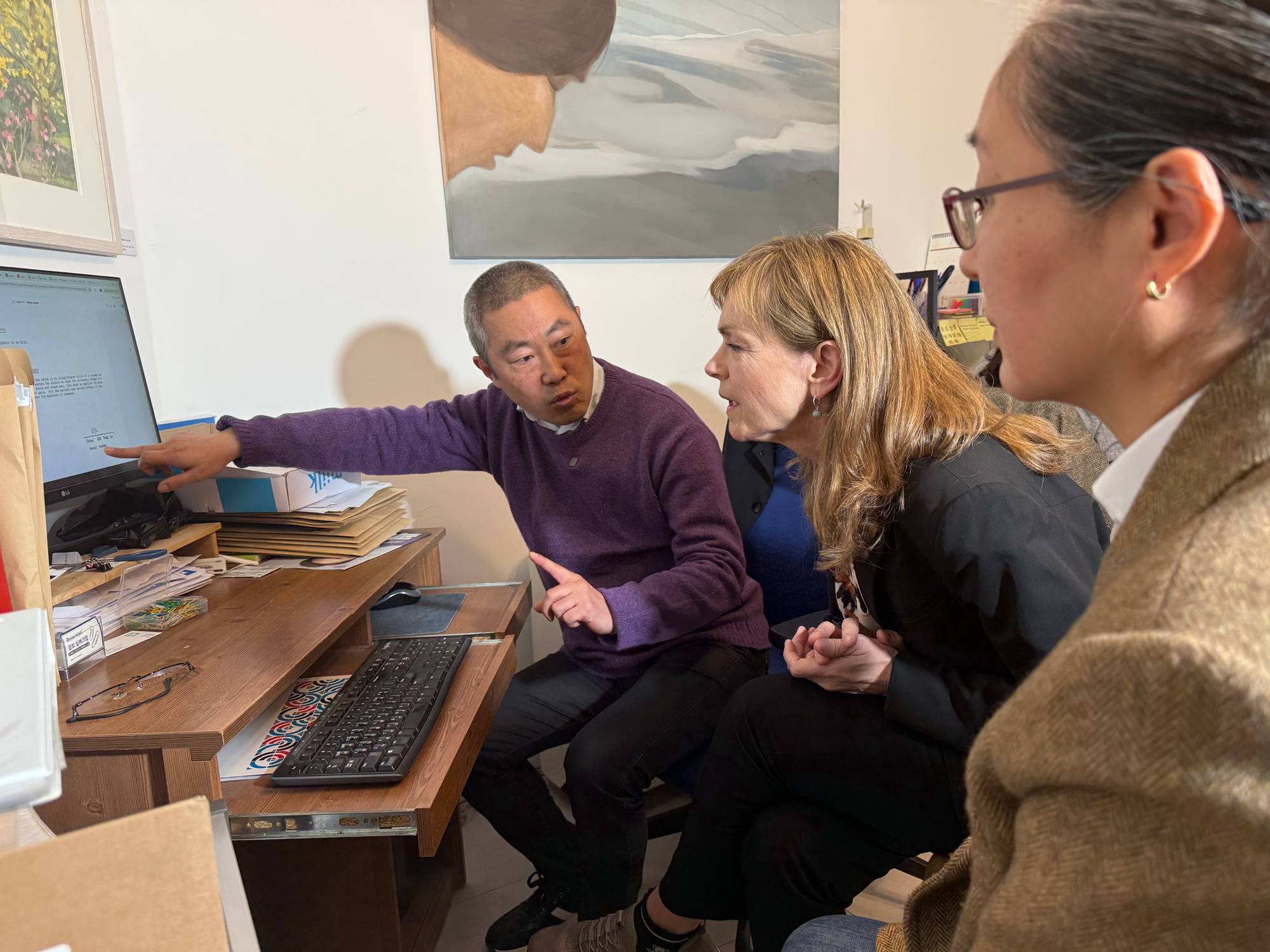
Recently, they found documents showing how births in young pregnant women were artificially induced prematurely to satisfy demand for children for adoption.
– So you could directly order a premature child. Prematurity will be perceived by most people as an unfortunate circumstance. That the child is born too early. Here it was set up in a system. So you could directly order a premature child from home to Denmark, Norway or Sweden.
Peter and Boonyoung will now try to prove that several of these children were declared stillborn when in reality they were given a different identity. The children were then sent out of South Korea for adoption.
In their work through the organization KoRoot, they have uncovered a pattern of a few pre-made stories. Stories of orphans and poverty. Used to cover up the fact that young mothers often did not give up their children of their own free will.
Kristin Molvik Botnmark is an author, sociologist and university lecturer. She is the first and only adoptive mother elected to the board of KoRoot.
– We have seen documentation that Western countries, including Scandinavia, had waiting lists and asked for more children. “Send more children. We have a long demand.”
Any system that is driven by demand is in a way industrialized, that is, to meet demand, says Kristin Molvik Botnmark
The six-year-old who disappeared
Peter and Boonyoung show Kristin the way under some blooming cherry trees at the entrance to an apartment complex.
They are going to visit Han Tae Soon. A woman and mother who is one of the few who has dared to defy shame and a perpetually nagging feeling of guilt. She has stood up and given a face to the women who had their children taken from them.
Han Tae Soon's daughter, Kyung Ha, was abducted at the age of six while she was playing outside the house.
Han Tae Soon looked for his daughter everywhere.
– I was out looking for my child every single day for a year. I walked until the nails fell off all ten of my toes.
Kyung Ha's photo was on the back of breakfast cereals sold throughout South Korea.
There was her name and the headline: Missing!
While Han Tae Soon searched and searched, Kyung Ha had been found. In fact, only a few hours after she disappeared. She had been left behind at a train station.
She was able to tell her name to the police and to the orphanage where they took her. She was able to tell her mother's name. She was still given a new name and identity, and was adopted as an orphan.
Han Tae Soon is still seething with rage against the authorities and police.
– Instead of helping me find her, they sent her to the US for adoption within months. I can't understand it.
After 44 years, mother and daughter were reunited after a DNA test. Now Han Tae Soon has filed a lawsuit against the South Korean state.
– The Korean government stole my child and sold her. I want an apology from the government.
– I feel like I have found her, but because of language we cannot speak directly to each other. It is a source of pain that is always there. There is so much I cannot say to my own child. It breaks my heart.
– I don't even know how you can put a price on that.
Tears flow from both Han Tae Soon and Kristin Molvik Botnmark.
"To your Korean mother"
– So many mistakes have been made.
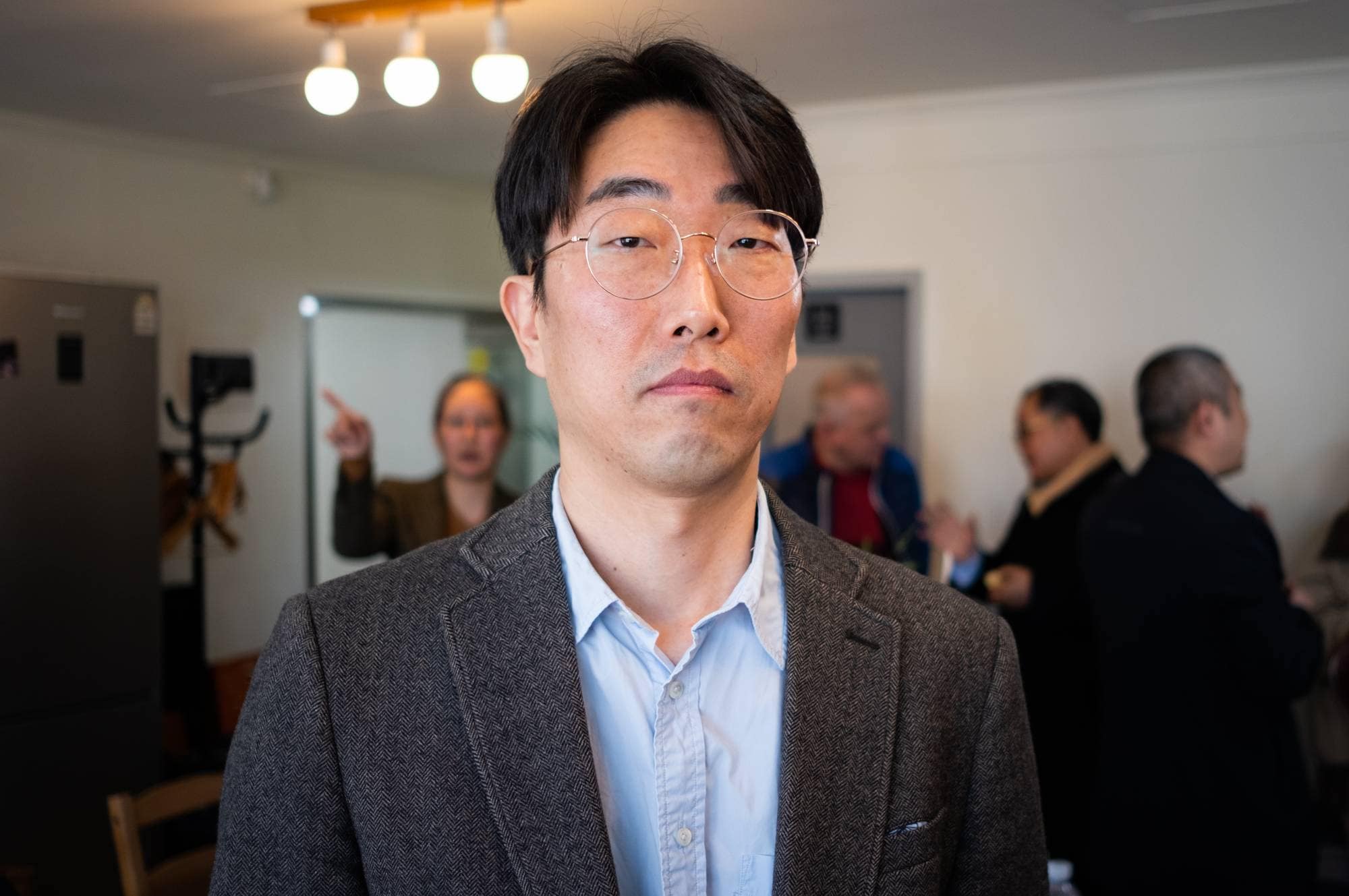
It's a book launch. In front of journalists from seven South Korean media houses, Kristin sits next to her son Anders.
The book, which in Norwegian is called "Adopsjonoppgøret", has been titled "To your Korean mother" in Korean.
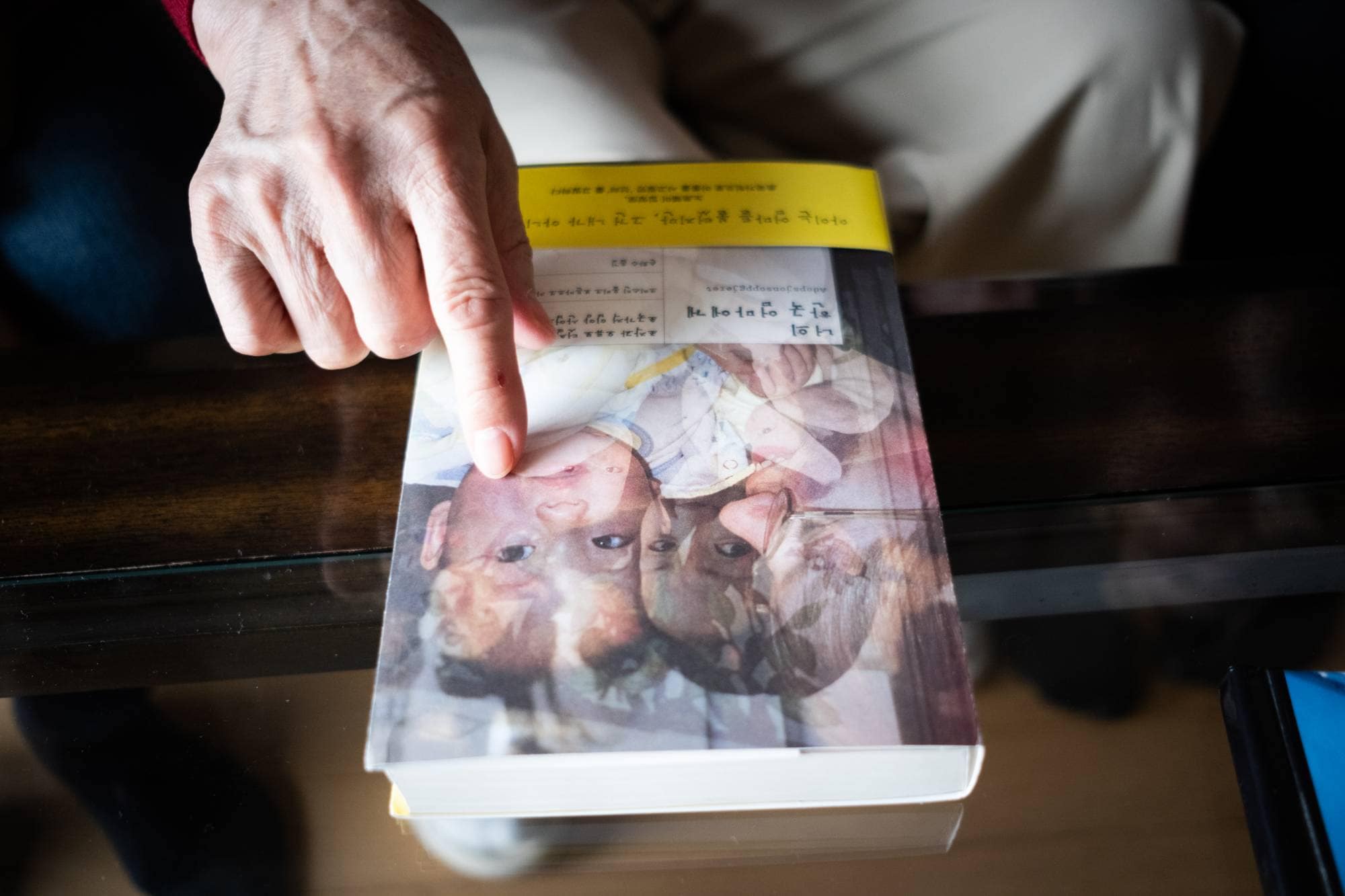
– This is a book about being a family, but I hope it will be read by government officials, politicians and decision-makers, says author and adoptive mother Kristin Molvik Botnmark when asked by reporters.
It is also a book about self-examination.
– When I'm hard on myself, I think that I've helped create this demand-driven industry, which adoption also became. And I feel very responsible for not asking those questions earlier.
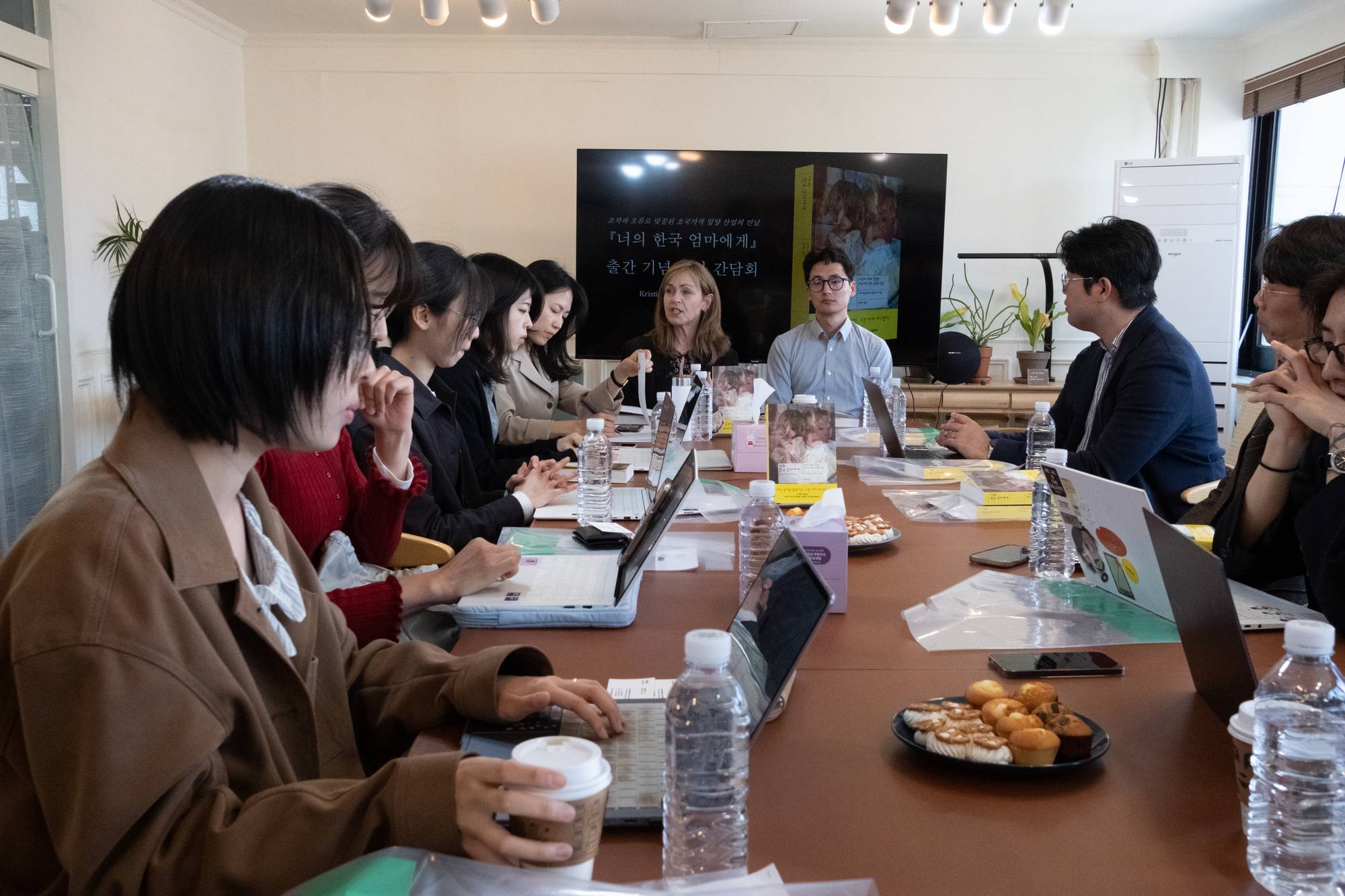
She feels that the book is coming out at a vulnerable and critical time in South Korea.
Also sitting in the room between the reporters is Chief Investigator Park Gun Tae. He headed South Korea's second Truth and Reconciliation Commission.
– I also see biological parents as victims of the adoption system, but many biological parents in Korea are very reluctant to speak out in public.
The Truth and Reconciliation Commissions are independent and set up by the government to investigate and find the truth behind South Korea's adoptions.
The third commission will soon begin its work.
– I hope the book becomes a turning point that encourages more biological mothers and fathers to let their voices be heard.
Last fall, the country's president officially apologized to all adoptees and their families, both in South Korea and in the receiving country, for the pain they have been caused.
Everything is fragile.
In the trendy Insadong district of Seoul, Anders' camera only rests for a few seconds.
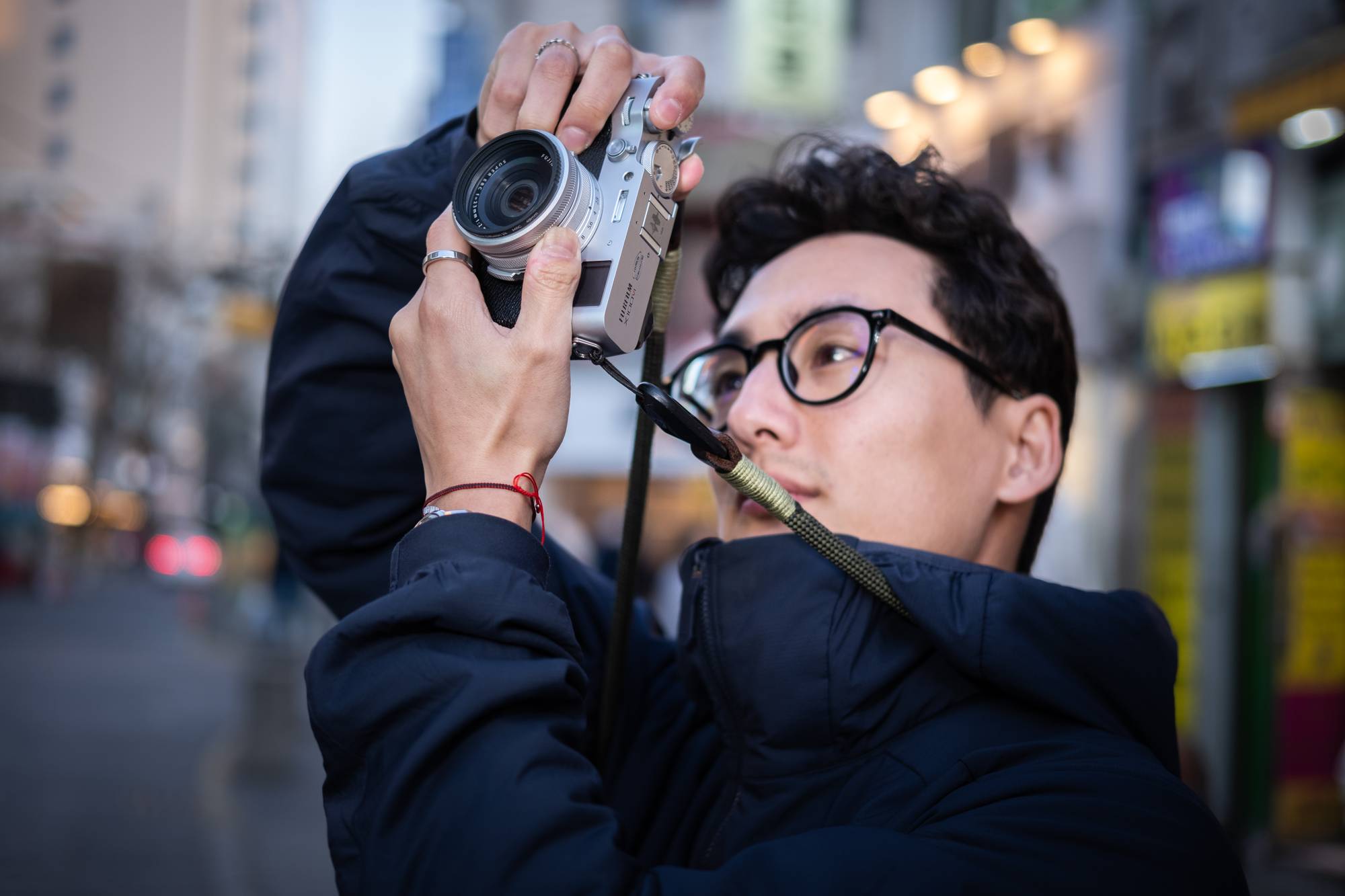
Much is interpreted through the camera lens. Street signs, place names and clothing fashions.
Anders is a professional photographer, educated in the UK and has an ongoing photo project about identity and South Korea.
- Photo: Anders Hyun Molvik Botnmark. / Botnmark
- Photo: Anders Hyun Molvik Botnmark. / Botnmark
- Photo: Anders Hyun Molvik Botnmark. / Botnmark
- Photo: Anders Hyun Molvik Botnmark. / Botnmark
→
Style and clothing have become important to Anders.
– I notice that I change my clothing style when I come down here. I dress a little more in the Oslo style at home in Oslo to blend in with the crowd there. But I've tried to wear a little more of the Korean style in Norway.
– Because I think it's time for me to find my own identity in Norway too. That I simply accept my Korean appearance.
There is a lot to balance between Norway and South Korea.
Anders has brought his girlfriend Anne Lise.
In a day they will meet Anders' South Korean mother.
The first meeting was three years ago.
The first meeting was overwhelming and entertaining at the same time.
– It was... It's hard to put into words. Because the person sitting in front of me was a stranger. We couldn't communicate other than nodding and smiling.
The second meeting was different. Anders stayed several hours longer than planned.
– Then I booked a ticket on a later train so I could be with her more. And on the train, when I left, the tears came.
Anders calls her Uemma. Korean for mom.
Anders has no contact with his biological father and five half-siblings.
They are looking for a gift for Uemma.
Everything is still fragile.
– I bought earrings and jewelry. I want to give a gift that is a little more neutral, not something from Norway. In case her children find the gifts. Then there will be no problems for her.
– Because she hasn't told her children about me yet.
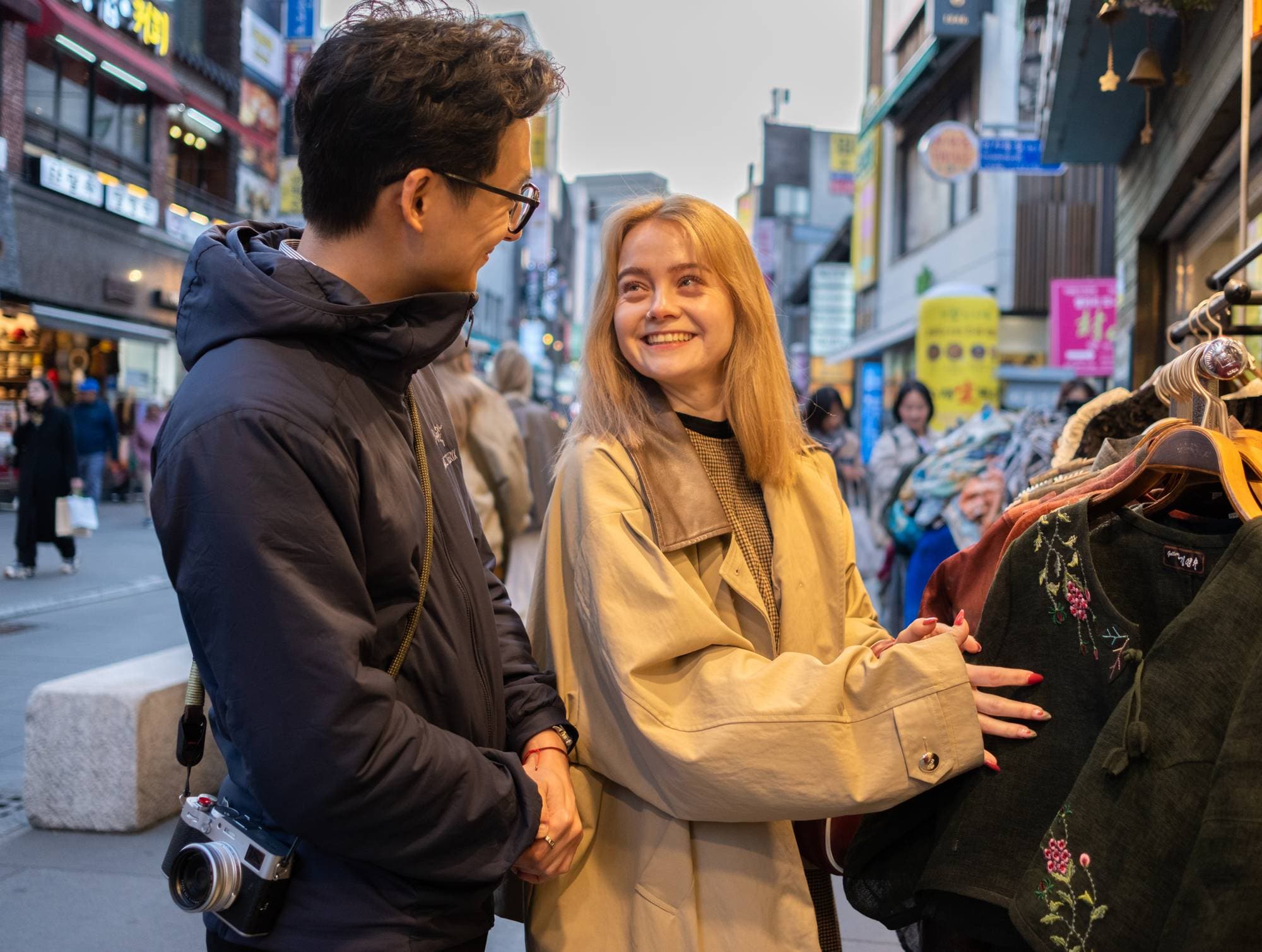
In his search for identity and his own history, Anders has not yet received any answers.
– I've never been 100 percent sure why I was given away. But she was very young when she gave birth to me. Then I think that she may have been pressured by her own mother to adopt me.
– It's very sad that maybe she didn't give me away because she wanted to.
– I've started to imagine more and more what life in Korea could be like. What would my life be like here if I hadn't been adopted?
In all that is difficult, Anders is happy about the trip to South Korea that he is making, and that his Norwegian parents are making. Glad that his Norwegian mother has the courage to publish a book about their own family and adoption in South Korea.
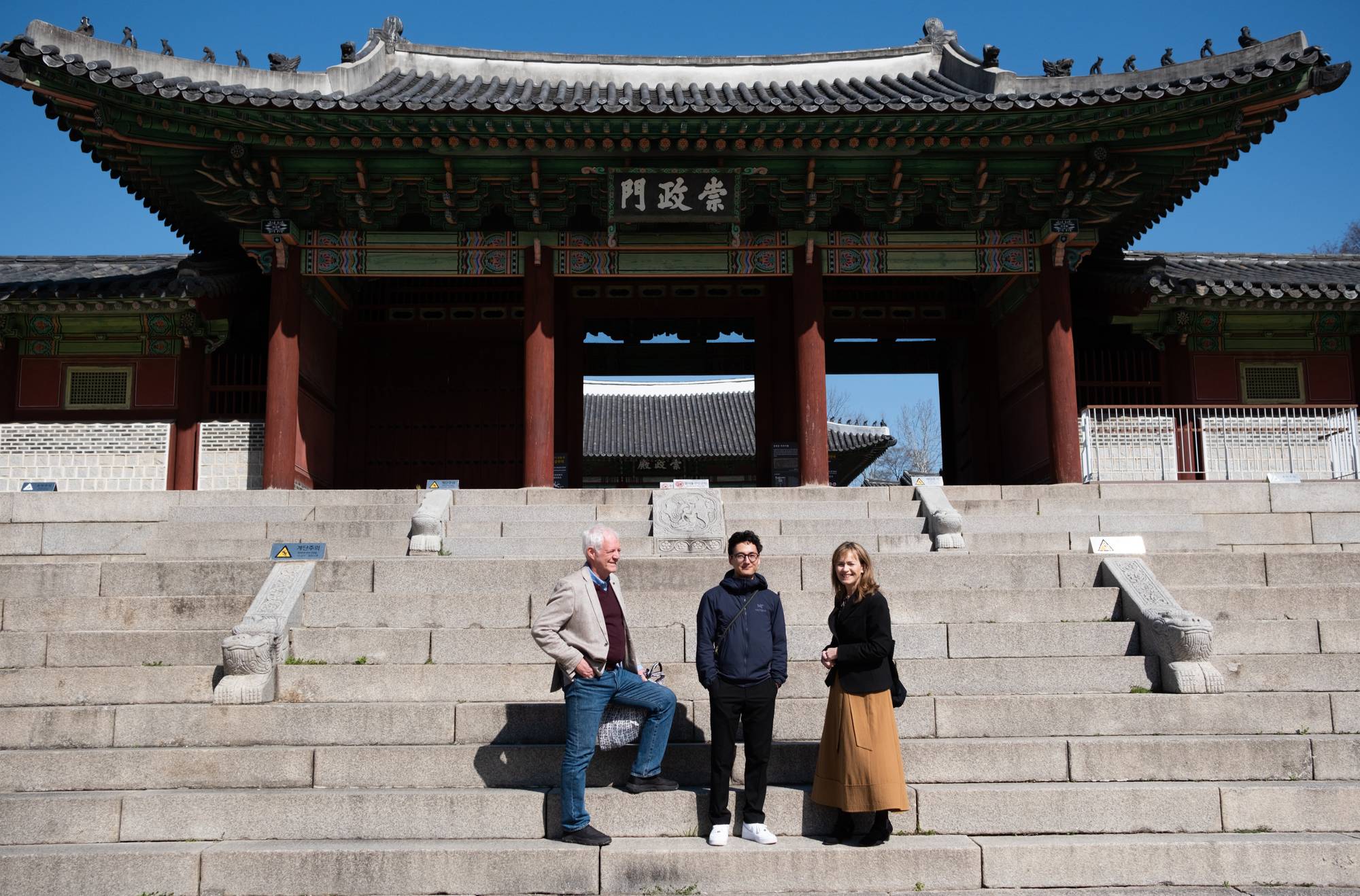
He views continuing to live with two mothers, mom and aunt, positively.
– I think it's just an enrichment. There have been times when it's been scary to tell uemma about things. It's been scary to tell my mom in Norway about things. But they've both reacted positively and supported me in what I've been through.
– It shows that I am on very solid ground on both sides.
South Korea has decided that all intercountry adoptions will stop by 2030.