Pardi: The man behind the search for family in Indonesia
For many adoptees searching for their roots in Indonesia, Pardi is one of the first people they encounter. As INEA's local search partner and an indispensable force within the IBU Indonesia team, he helps adoptees trace biological relatives, unravel their adoption history, and guide them through often emotional reunions.
In this interview, Pardi shares how a search unfolds, what challenges he encounters along the way, and what impact this work has had on him personally over the years.
Pardi, what does guiding adoptees during their search look like in practice?
“Every search begins with the documents we receive,” says Pardi. “We first create an overview of all available information and then map out the locations mentioned in the file.”
Before the actual search can begin, several formal steps must first be taken. Adoptees sign a power of attorney, giving Pardi and his team permission to conduct research on their behalf.
That power of attorney is very important. When I visit a village or go to a government agency, I must be able to demonstrate that I am authorized to request information on behalf of the adopted person. Without that permission, people are often reluctant to share information.
The search usually begins with the local authorities; only then does the team enter the village or neighborhood itself.
“In Indonesia, a lot revolves around trust. If you just walk into a village and start asking questions, people can become suspicious. That is why we first seek contact with local officials. Their support helps to win the community’s trust.”
How a search proceeds varies greatly by region. In villages, people have often known each other for generations, and events from the past are still well remembered. In large cities like Jakarta or Surabaya, the situation is very different.
In a village, people often know exactly who lived where and what happened in the past. In large cities, neighbors sometimes barely know each other. That makes finding information much more difficult.
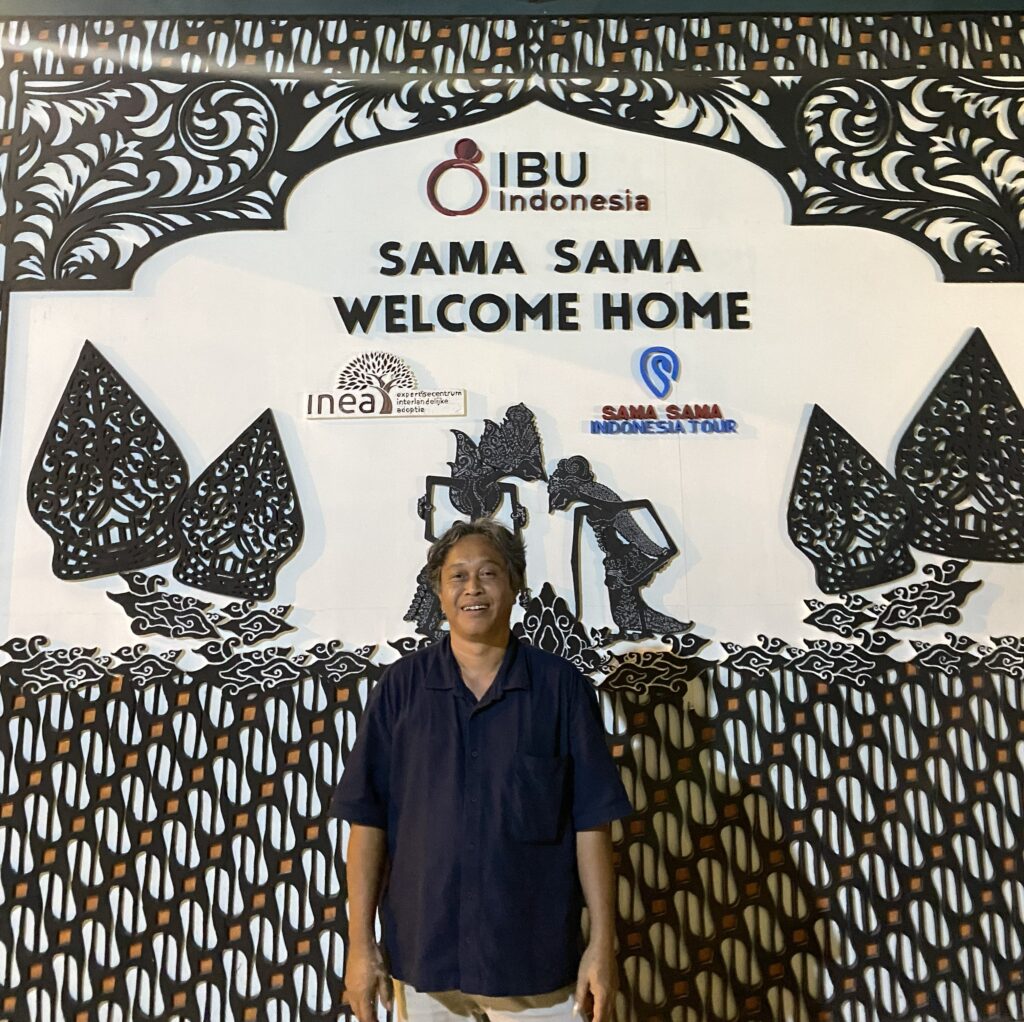
Pardi for the Welcome Home in Yogyakarta
What do you find most beautiful about your work as a seeker? Is there an experience you will never forget?
In addition to his work for IBU Indonesia, Pardi works in tourism. Thanks to his extensive knowledge of Java and Bali, he knows not only his way around, but also the culture and customs of various regions. That experience is of great value during his explorations.
What I find most rewarding is that I truly learn to understand people. Every region has its own culture and way of communicating. An approach that works in Jakarta might not work at all in East Java.
For Pardi, every search feels like a puzzle. Pardi: “Sometimes you know you are close to the truth, but people aren’t ready to tell their story yet. Then you have to think carefully about how to build trust and ask the right questions. It is precisely that challenge that motivates me.”
One search in East Java has always stayed with him. There he met a family who were visibly angry upon his arrival.
“They thought I was affiliated with the organization that had taken their relative’s child away many years ago. They were sad, angry, and suspicious. But by listening carefully and calmly explaining why I was there, trust slowly grew. Eventually, I was able to prepare them for a video call with their lost relative: the person who had been adopted and lived in the Netherlands.”
When he looks back on it, these kinds of moments are among the most valuable of his work.
It gives me great satisfaction when I see that people, despite their anger and distrust, are once again open to understanding and a conversation with each other.
Some adoptees even visit your home. What does that mean for you personally?
Not every search ends with finding biological family. Pardi sees how painful that can be.
When adoptees come to Indonesia and do not find their family, I always say: if you do not have (or could not find) family here, consider me family.
His involvement does not stop as soon as the search is completed. He regularly welcomes adoptees to his home and introduces them to Indonesian life.
“I want them to get to know the country they come from. I talk about the culture, daily life in the villages, local traditions, and what it used to be like growing up here. Because I am about the same age as many adoptees, I can also tell them what it was like to grow up in Indonesia during that same period.”
For Pardi, that connection to Indonesia is at least as important as finding biological family.
They come from Indonesia. Even if they cannot find their biological family, I think it is important that they feel connected to their roots and feel welcome here.
Did you already know a lot about the reality behind intercountry adoption before working at INEA, and how has this work influenced you?
Before Pardi began leading searches, he knew that many Indonesian children had been adopted abroad, particularly to the Netherlands. But he only discovered what lay behind many of those adoptions when he started working as a searcher himself. Some discoveries made a deep impression.
“Sometimes the woman listed as the biological mother in the documents turns out not to be the biological mother at all. In some cases, DNA testing shows that there is no biological relationship whatsoever. Then you ask yourself: what really happened here?”
As a result, his view on adoption has changed drastically. Pardi: “This work can be very emotional. Sometimes I get angry when I hear what happened with certain adoptions. At other times, I meet families who have been living for decades with grief, shame, or questions that have never been answered.”
Many situations prove to be extremely sensitive. Some families fear social exclusion, while others have never spoken openly about the circumstances surrounding the birth or adoption of a child.
You have to choose your words very carefully. One wrong sentence can cause a door to close forever. That is why building trust is so important.
Since the collaboration with INEA, a lot has changed. What has changed for you, and what new opportunities has that brought?
Pardi sees that the collaboration with INEA significantly strengthens the team's work.
The biggest difference is that we now have more opportunities to conduct more in-depth research.
Thanks to the additional financial support, searches can be conducted that were previously simply not feasible. For instance, there is more scope for extensive archival research, mapping historical locations, and revisiting places that have played a role in adoption histories.
One of the most impressive projects was the research into a forgotten cemetery connected to a former children's home.
Pardi: “We received information that babies from a children's home were buried at a church decades ago. Thanks to the support of INEA, we were able to visit the location, obtain permission to make the site accessible, and conduct further research.”
Although far from all questions have been answered, the research yielded valuable information that had remained hidden for years.
Without this support, we would never have been able to conduct this research.
The collaboration also made the establishment of Welcome Home possible: a place where adoptees visiting Indonesia are received, guided, and supported during their search or roots journey.
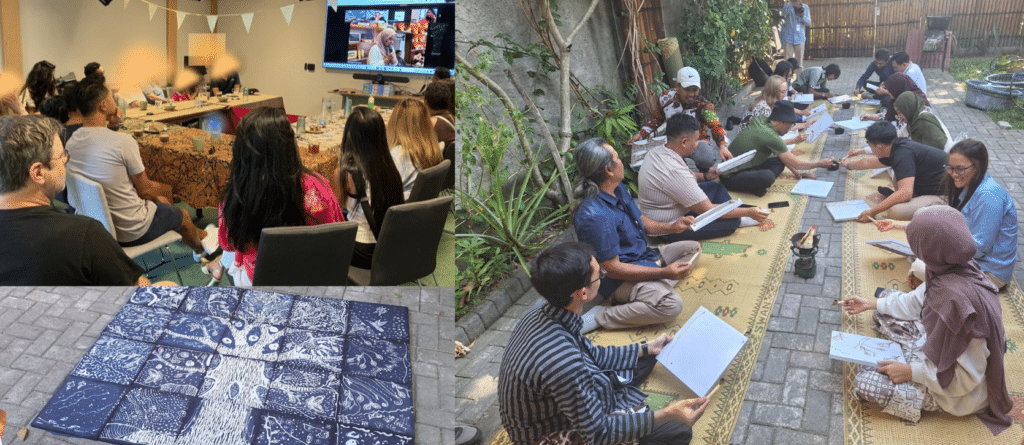
The festive opening of Welcome Home on July 17 in Yogyakarta . Read more about the opening and Welcome Home here .
What is the greatest added value of the collaboration with INEA for you?
According to Pardi, the greatest value of the collaboration lies in the opportunities that have arisen from it: not only for current searches, but also for future searches and information for children of adoptees.
Thanks to the support from INEA, we have gained access to information that was previously out of reach. We can conduct more extensive research, review old files, and lay a stronger foundation for future searches.
At the same time, he remains realistic. Not every search ends with good news. Pardi: “Sometimes we don’t discover a nice story. Sometimes the truth hurts. But it remains the truth, and people have the right to know it.”
In addition, the team is committed to improving access to information for adoptees and calling for better regulations in Indonesia. Adoptees still face many obstacles, particularly when obtaining original birth certificates and other official documents.
There are still many challenges, but step by step we continue to move forward. I hope that in the future it will become easier for adoptees to access information about their own history.
This interview was conducted in collaboration with Pardi and the organization IBU Indonesia , a partner of INEA. Together, INEA and IBU Indonesia are committed to guiding adoptees in their search for family and their origins in Indonesia.