Home  

‘The nurse told me I couldn’t keep my baby’: how a controversial Danish ‘parenting test’ separated a Greenlandic woman from her children

Now your two hours begin.” The countdown started when Keira Alexandra Kronvold had just given birth in the early hours of 7 November 2024. Keira, 38, was originally granted just one hour with her daughter, Zammi, before her baby was to be removed from her and taken to foster parents – but the midwife begged authorities to give them more time. Before Zammi’s arrival, the midwife asked if Keira had any wishes. “I said, ‘I want hand and footprints. I want to grab her, I don’t want you to catch her when she is born. I want to catch her myself.’”

During labour – which lasted just an hour and a half – Keira kept checking whether her 20-year-old daughter, Zoe, who had never seen a birth before, was OK; and she was determined not to scream, to avoid waking up the other mothers and babies on the ward. But when Zammi arrived, everything else – the months of stress, worry and pressure – gave way to pure joy. “I just laid back,” she says, arms cradled and slowly reclining on her sofa, as she re-enacts the moment at home in the town of Thisted, northern Denmark, “because I had to keep her warm. She was so beautiful. That emotional feeling is indescribable. Right there: unconditional love, pure happiness, all that joy.” She wished Zammi a happy birthday and told her how much she loved her. She cried tears of joy, counted Zammi’s tiny fingers.


And then the mood shifted. “It feels like you come into the darkness,” says Keira, her body frozen. “Now I have to count the minutes. That pure joy was gone. And that moment I felt I could show my emotions.” She started to breastfeed Zammi. Even letting go for the midwife to do her checks was torturous.

A photograph of Zammi in the cradle Keira had prepared for her

Udupi connect: Meet the man behind landmark free-trade agreement

After 16 years of negotiations, India and the four European Free Trade Association (EFTA) countries in March signed a free-trade agreement (FTA), which may be instrumental in India receiving $100 billion as foreign direct investment (FDI) in 15 years with one million jobs. There is a Karnataka connection to this landmark deal. Dr Niklaus-Samuel Gugger, best known as Nik Gugger, is an Indian-born Swiss politician who is said to have played an instrumental role in the agreement being signed. Gugger currently serves as a member of the National Council (Switzerland).

In 1970, a widow, Anasuya, gave birth to a boy at the CSI Basel Mission Hospital in Udupi. Unable to keep the child, she gave him up to Dr Marianne Pflugfelder, and trusted the missionary hospital to find the best place for him. While several orphan kids live an underprivileged life, Gugger was rescued by a Swiss couple Fritz and Elizabeth, who adopted and named him Niklaus-Samuel Gugger.


The commerce and industry ministry has said that the agreement will increase Indian industry’s access to the EU market where the country is looking to sign another FTA, while adding that the EFTA is offering 92.2% of its tariff lines, which cover 99.6% of India’s exports. The agreement also covers tariff concession on processed agricultural products (PAP) from India.

India is offering 82.7% of its tariff lines, which covers 95.3% of EFTA exports, nearly 80% of which is in gold.

Swiss watches and chocolates will enjoy the elimination of duty after seven years and concessions are also expected to help India import machinery at cheaper rates. India has provided concessions on 105 of 156 sub-sectors, including areas like accounting, business, and health within services. On the other hand, EFTA countries have provided concessions in over 110 sub-sectors including accounting, auditing, and legal. India exports services worth over $5 billion to EFTA regions.

Speaking to Bangalore Mirror, Nik noted that Switzerland and India have always had a cordial relationship, with both the countries having celebrated 75 years of friendship. He referred to Switzerland and India signing the ‘Treaty of Friendship and Establishment’ on August 14, 1948.

This was the first-of-its-kind, and one of the very first bilateral agreements concluded by the newly independent India. He further expressed his joy over being able to contribute back to the country he was born in by playing a significant role in the recent FTA being signed. Explaining that the negotiations once again began close to one and half years ago, Nik said that as challenges arose, they were overcome by diplomacy and hearing all the stakeholders involved.

Deeming his life no less than a Bollywood story Nik delved into his personal life. Growing up in Switzerland, Gugger worked as a gardener, drove trucks and went to school, earning a degree in mechanical engineering.


Further he went on to study social work, management and innovation along with political communication as well as emergency psychology.

He has been provided with an honorary doctor’s title by the Kalinga Institute Orissa for his work on social science and has set up several educational programs in India.

He is also the owner of a famous Ayurvedic ginger drink in Switzerland – Zingi. He is the Founding President of Swiss Indian Parliamentary Group. Nik was the first to create a group in the Swiss Parliament to strengthen friendship with India. Now, the group has over 62 Swiss Members of Parliament as its active members.

A. Dohle: Complaint to OLAF - Fraud Secondment

GOOGLE TRANSLATION

As discussed over the phone on Friday, I am sending you some documents relating to Ms. Roelie Post's "secondment" to ACT.

In my opinion, it is incompatible with civil servant status for a civil servant to be seconded by her employer to work for an NGO.

It is even more questionable that this civil servant, with the knowledge of her entire hierarchy, founds an NGO and pays for the registration with her own money.

Furthermore, in my opinion, there is a conflict of interest if Ms. Post has previously worked on child protection / children's rights within the DG Enlargement.

Interpol search for Romanian children adopted abroad

Interpol search for Romanian children adopted abroad


29 September 2006 Oana Craciun, Cristina Hurdubaia | 0 comments | 948 views 
Rating: 1 votes 
  
  
Romanian investigators have asked for Interpol's help to track down children sent for adoption abroad instead of others.
Children adopted only on paper in the 1990s by several foreign families and their possible substitutes are being sought not only by Romanian prosecutors and police officers, but also through Interpol. Prosecutors from the Criminal Investigation and Forensic Section of the General Prosecutor's Office, together with officers from the Criminal Investigations Department of the General Inspectorate of Police (IGP), are investigating the situation of the 11 children who are known to have remained in Romania, never reached their foreign families, but who were replaced by others.
Representatives of the Prosecutor's Office informed us that the prosecutors have requested the Ministry of Administration and Interior (MAI) to communicate the border points through which 11 children destined for international adoptions are said to have left the country.
Advertisement

At the same time, the identification data of the people who accompanied them and the declared destination upon leaving the country were also requested. Interpol's mission is to verify whether the adopted minors are currently with the families who adopted them on paper and not in Romania, as is actually suspected. To date, the accredited foundations and associations that carried out the adoption mediation activities for the 11 children have not been identified, the prosecutors of the General Prosecutor's Office also said.


First there were 40


The scandal of children exchanged before the border broke out last year, in October. Then, Theodora Bertzi, secretary of state at the Romanian Adoption Office (ORA), received information from all over the country that 40 children who should have arrived in the 90s with families in France, Italy or the USA actually remained in Romania, some even with their natural families. After further investigations by the Prosecutor's Office and the Ministry of Internal Affairs, in January 2006, the ORA received confirmation that in 11 of the cases, the children had been replaced with others and substitutes had crossed the border in the names of those who were to be officially adopted. Bertzi stated that, in order to take the children out of the country, the passports of those who had never left were used and that the minors who arrived in their place may be "stolen or missing children". Theodora Bertzi claims that the transfer across the border could have been done quite easily, considering that "up to the age of 14, a child does not have a photo on any official document, and the adopted children were babies."
The authorities say that they have never encountered such a situation before and that is why they have asked the Prosecutor General's Office and the Ministry of Internal Affairs to find out exactly who is to blame.

Beat Jans wants to ban adoptions abroad – Parliament puts a stop to his move

Until 1999, thousands of children came to Switzerland to be adopted by parents, sometimes under dubious circumstances. Nevertheless, the Federal Council's adoption ban is likely to fail – including because of two people directly affected.


Shortly :

  • Thousands of children came to Switzerland through illegal practices between 1970 and 1999.
  • The Legal Affairs Committee of the National Council rejects the adoption ban proposed by the Federal Council by a majority.
  • Two directly affected National Council members are actively campaigning against the ban.

It could have been a rewarding deal for the asylum-plagued Justice Minister Beat Jans. Everyone agrees: The suffering of children adopted from abroad under questionable circumstances must not be repeated. According to the latest findings, between 1970 and 1999, several thousand children from abroad were brought to Switzerland for adoption through child trafficking, with forged documents, missing information about their origins, or through other illegal practices.


No ban on international adoptions

No ban on international adoptions

Submitted by:

Committee for Legal Affairs National Council

Reporting:

Gianini Simone

Commission votes against ban on international adoptions

  • Adoptions of children from abroad should continue to be permitted in the future.
  • The responsible National Council committee opposes a ban planned by the Federal Council.
  • Instead, she wants to improve controls on international adoptions.

The National Council's Legal Affairs Committee (RK-N) passed a corresponding motion by 19 votes to 6, according to parliamentary services. The National Council will then decide on the matter.

The majority of the commission wants the Federal Council to "immediately" revisit its fundamental decision from the beginning of the year and, instead of banning international adoptions, increase oversight and transparency. This is intended to reduce the risk of abuse. The argument against a ban is that it would stigmatize adopted persons and their families, according to the statement from the RK-N.

Federal Council looks abroad

At the end of January, the Federal Council announced its intention to ban the adoption of children from abroad. The Federal Department of Justice and Police (FDJP) was tasked with preparing a corresponding consultation draft by the end of 2026 at the latest. A group of experts concluded that abuses could not be ruled out. Such abuses must no longer occur, said Justice Minister Beat Jans. A ban is the best way to protect all those affected, especially children.

Fiom: Response to the De Winter Commission's Investigation

The Commission for the Investigation of Domestic Relinquishment and Adoption today presented its report 'Damage through Shame' to State Secretary Teun Struycken. This report describes the period 1956-1984 of domestic relinquishment and adoption in the Netherlands and its impact on all parties involved. 

The research report stirs up many emotions and memories for all those who had to give up their child, for children who were given up and for families who were involved. The report touches on very personal and painful experiences that have left deep scars for many and have irreversible, lifelong consequences. 

We will carefully study the committee's research report and also critically examine our own role. We want to learn from the past and be of significance to everyone who has had to deal with adoption.  

Does the report evoke something in you that you would like to discuss with us? Please feel free to contact us. We will be happy to make time for you. Send an email to reactie@fiom.nl and let us know which form of contact is most convenient for you.  

AASW Historical Forced Adoption Practices Apology | AASW

18 June 2025

The Australian Association of Social Workers (AASW) unreservedly apologises for the historical forced adoption practices that separated mothers from their babies, and children from their families.

We acknowledge the profound trauma endured by women whose babies were forcibly taken and adopted out, recognising the deep and lasting emotional scars of these unjust practices. We sincerely apologise for the harm caused, honouring their strength and resilience while committing to truth, healing, and remembrance.

Through listening to the stories of people with lived experience we understand and recognise, the profound and continuing harm of these actions, including the deep loss, trauma, disempowerment, and grief experienced by mothers, children, fathers, grandparents, adoptive parents and siblings, families and their descendants.

The AASW recognises that these practices represented serious breaches of human rights and resulted in the loss of family connections, identity and history. We also acknowledge the vital responsibility of the social work profession to uphold and protect human rights in all areas of practice. This means maintaining ethical awareness, fostering critical reflection and challenging practices and systems that risk causing harm.

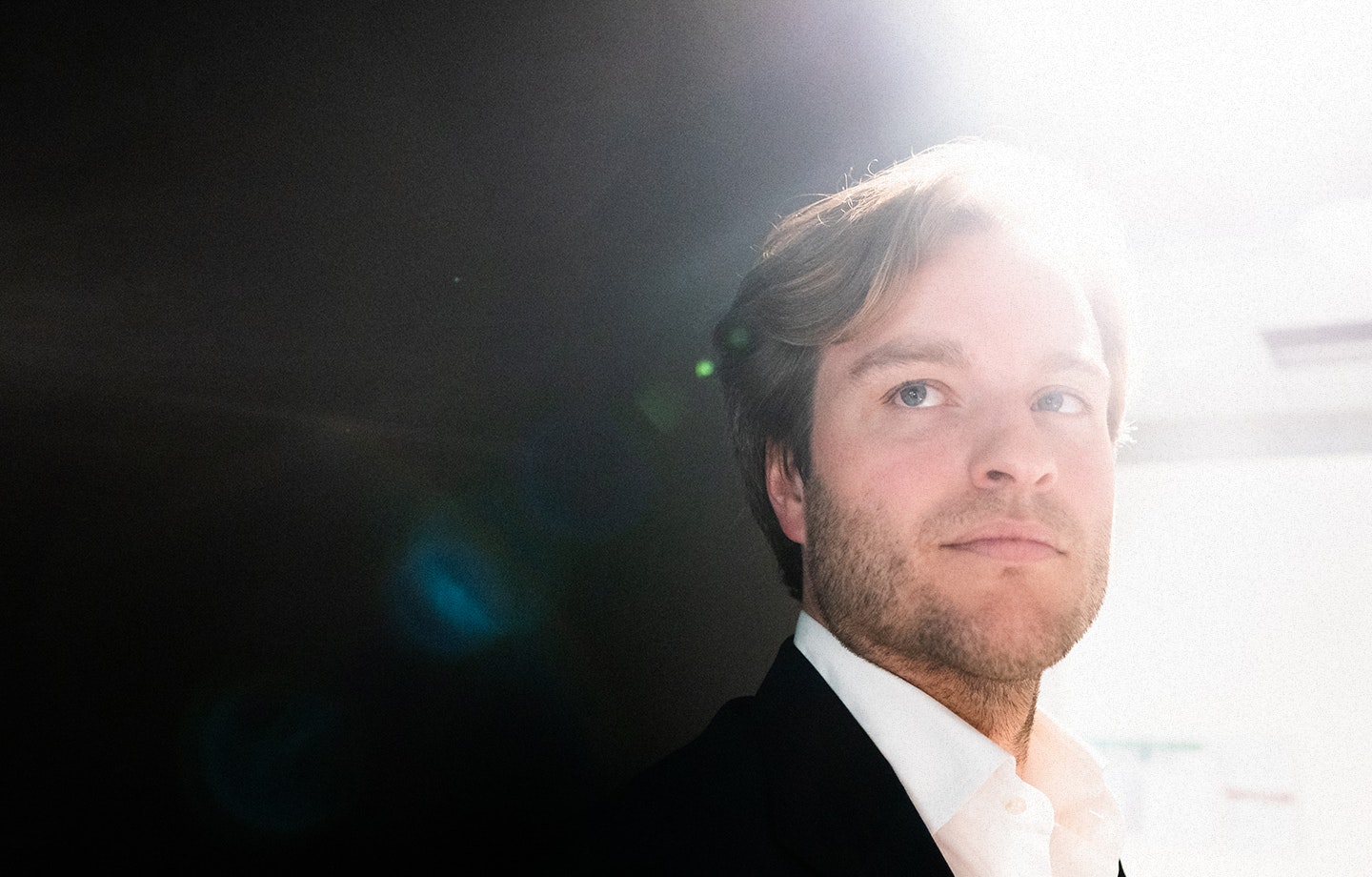
"A ban on international adoptions does not do justice to my story," says EPP National Councillor Nik Gugger.

Nik Gugger: «Verbot von Auslandadoptionen wird meiner G... https://www.nzz.ch/schweiz/ein-verbot-von-auslandadoptio...

1 of 21 19.06.25, 05:43

Nik Gugger: «Verbot von Auslandadoptionen wird meiner G... https://www.nzz.ch/schweiz/ein-verbot-von-auslandadoptio...

2 of 21 19.06.25, 05:43

Der Zug kurvt durchs grüne Gürbetal, von Bern nach Uetendorf, wo Nik Gugger,
55 Jahre alt, Nationalrat der EVP, aufgewachsen ist. «Siehe da, ich habe immer
Glück», sagt er, als sich die Wolken verziehen.