Home  

OFFENCES AGAINST CHILDREN Child smuggling racket busted

OFFENCES AGAINST CHILDREN

Child smuggling racket busted

In May, 2001, the West Bengal Police arrested three key persons in Cooch Bihar District, engaged in international child trafficking. The three accused were identified as Upendra Nath Sarkar, one of his sons, Nayan Sarkar and Majidul Haque. Two Bangladeshi kidnapped children were rescued from them. Another racketeer, Nitai Das, was arrested from Bhaktinagar area near Siliguri. The gang had earlier smuggled out 22 children from India and Bangladesh to Dubai via Nepal. The accused used to kidnap children below the age of 10 from Bangladesh and remote villages of India to send them to Dubai from where they were sent to different Arab countries to be used in Camel races.

Adoption racket busted

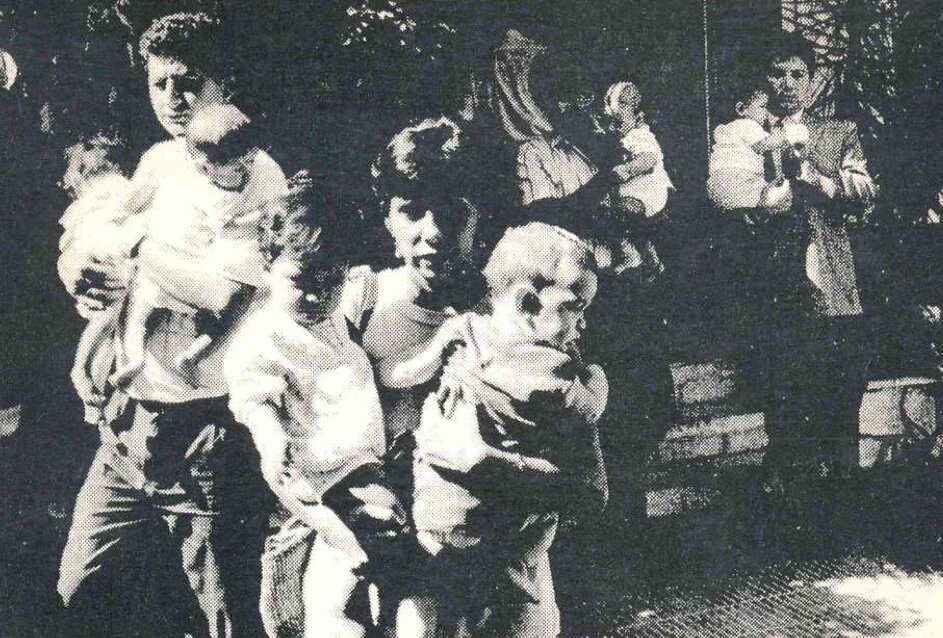
During May, 2001, a child adoption and trafficking racket was unearthed by Orissa Police in Cuttack. Seven children, between six years and one year were rescued by the police in a raid from the orphanage premises, Vikash Parishad Sishu Ashram (VPSA) run by Sukhdev Swain. The orphanage was functioning illegally at Kadampada in the outskirts of Cuttack city since 1994. Some eminent persons were arrested in connection with this racket. All the children were found housed in the most deplorable conditions. They were malnourished and ill treated.

A long wait for relief

They wonder why an NGO, Madras Social Service Society (MSSS), which adopted Koraikuppam, has not provided tangible help.


COVER STORY

A long wait for relief

T.S. SUBRAMANIAN
in Chennai

Digging for roots

Digging for roots
Saturday, March 18, 2006 03:25:42 pm

Print this PageEmail this PageComment on this Page


Looking into the past
Arun Dohle, a German citizen, is not here only to get to know his birth
country better. He is in India to find his biological mother.

Thirty three years ago, Arun was adopted by a German couple. But life,
without knowing about his real parents, has never been complete. The
orphanage in Pune from where Arun was adopted first told him they have no
records and then they plainly declined to give the details. But his
search, that started five years ago still goes on with no result till now.


Arun Dohle says, "First thing is that the adopted child should not search.
But we are not children, we are adults. Then the agency says that the
mother was unwed and she dumped you and does not want to see you. But this
is a vital human right."

Finding the biological parent is a tough task in India. This in spite of a
Supreme Court judgement in 1987 that clearly says that once the adoptee
child attains age of maturity, there is no serious objection in giving
details about the biological parents."

Similarly for Maria Chaya, the hunt for her biological mother has been
long and traumatic. When she was just four, Maria was adopted by a German
couple, but she was convinced she was kidnapped and then sold to foster
parents.

Maria Chaya, another adoptee, says, "I was treated very well. My mother
loved me very much. I always had enough to eat. I find it difficult to
believe that she gave me up for adoption. I tried to find out whether this
was true or not. But the nuns refused to let me see my records."

With so many stumbling blocks, more than 40 Indian adoptee children from
all over the world have come together in an e-forum. Indian Roots aims to
help one another and to bring more into the fold. Arun and Chaya are also
battling for their right to know who their parents are, in Indian courts.

The reasons that must have triggered each one of them to search for their
biological parents may be different, but the sentiment is the same, a
strong sense of being incomplete. But when it comes to revealing the
biological parent, the Indian system has grey areas. People like Arun are
however ready to fight the system.


(By Beverly White)


More From This Section >


.
Campus Politics
.
Exam paper errors
.
Living on the edge
.
IIM students want more
More...
 

Religion and Adoption in India: Toward a Uniform Adoption Law

ABSTRACT 


India’s adoption laws reflect layers of history and belief. In 1890, the Guardians and Wards Act created a guardianship route for non-Hindu families, leaving the child tied to birthline inheritance. Sixty-six years later, the Hindu Adoptions and Maintenance Act established a clear path for Hindus, Sikhs, Jains, and Buddhists to adopt—and to grant full inheritance rights. A more open option emerged with the Juvenile Justice (Care and Protection of Children) Act in 2015, inviting any citizen to take in an orphan or abandoned child. Yet the old Hindu statute remains alive, producing two parallel systems. That gap affects who can adopt, how quickly a child finds a home, and which rights a new family enjoys. This study traces each law’s origins, unpacks the holes they leave, and looks at how outcomes vary by community. It brings together a doctrinal analysis to build a single, cohesive adoption law- one that honors India’s constitution and its international obligations

Masho and Roba: To Denmark with little love

ADOPTIONENS PRIS — THE PRICE OF ADOPTION

“It’s almost five years ago that I began following the story of Masho and Roba. This was at a time when I believed adoption was a noble act for children in need of parents, and for parents in need of children. But what I witnessed was not the tale of joy and hope that I had imagined.”
“Det er nu snart fem år siden at jeg startede med at følge Masho og Robas historie. Det var den gang jeg troede at adoption udelukkende var en god gerning for børn der behøvede foreldre, og foreldre der behøvede børn. Men det jeg blev vidne til var ikke den historie full av glede og håb som jeg havde forestillet mig.”
— Katrine W. Kjær

Part 1 | Part 2 | Part 3 | Part 4 | Part 5 |Part 6

Full episode (Danish, no subtitles)

End titles (not included in the subtitles)
“77 children were adopted from Ethiopia to Denmark the same year as Masho and Roba.”
“Of those, only 2 were classified as orphans.”
“Every year, about 30,000 children are adopted internationally.”

Terra dos Homens - Our Story

The Brazilian Association Terra dos Homens (Terra dos Homens) is a non-profit organization, founded by Claudia Cabral, a psychologist working in the social field since 1977 and concerned about the number of children separated from their families and living in shelters.

The organization's creation is an outgrowth of the work Claudia began in 1985, when she was the coordinator of a late interracial adoption program at the Fondation Terre des hommes in Lausanne, Switzerland.

The person then responsible for the program created the Brazilian Terra dos Homens, establishing a board of directors, appointing advisors, and acquiring legal autonomy in 1996. This autonomy enabled the establishment of new partnerships and the expansion of its field of action in Brazil, as a result of Claudia's relentless pursuit of fulfilling her mission of being an agent of change in an unjust welfare system.

In 2003, Terra dos Homens was certified as a Federal Public Utility entity. In 2006, it was certified as a State Public Utility and Social Assistance Charity entity.

Results |

Identity Rights and access to origins Every person has a universal right to know who they are and where they come from.

Protecting rights

Search for Origins is a sensitive and personal process

Search for Origins covers the series of steps a person undertakes in order to access information on their origins.

Based on its extensive field-experience and expertise related to post adoption services, especially in cross-border access to records, information, search and reunion, ISS is well-equipped to provide individualised support to adoptees and their families.

Odia girl confesses faking abuse by adoptive parents in US to return home for love

The incident came to light at Bhubaneswar Airport, where Sejal confessed that she created the false narrative simply to return to Odisha and reunite with her childhood friend and lover, Amar, who lives in Balasore.


Sejal John, an Odia girl living in the United States, has admitted to fabricating a viral video that accused her adoptive mother of physical abuse and forced religious conversion. The incident came to light at Bhubaneswar Airport, where Sejal confessed that she created the false narrative simply to return to Odisha and reunite with her childhood friend and lover, Amar, who lives in Balasore. 


Childhood Bond Rekindled Across Continents

Sejal had moved to America at a young age after being adopted. Though she built a new life abroad, her connection with Amar was revived years later through social media while she was in the 12th grade. Their bond deepened quickly, and Sejal began longing to return to Odisha to be with him, a desire she feared expressing openly to her adoptive family.

The Viral Video that Triggered International Concern

Fwd: 936 kinderen naar hier gehaald en níemand weet of dat correct verliep (Fwd: 936 children were brought here and no one knows whether it went correctly)

ALTHOUGH THE GOVERNMENT HAD SUFFICIENT SIGNALS ABOUT FRAUD IN ADOPTIONS FROM ETHIOPIA

·        

  • Jeroen Bossaert

·    April 29, 2019

·    5:00 AM

James Timmermans steps down as manager at INEA

James Timermans is stepping down as manager at INEA. Since March 2023, James has worked diligently, on behalf of the Ministry of Justice and Security, to establish the first national expertise center for intercountry adoptees and their families.

James Timmermans is stepping down as manager at INEA. Since March 2023, James, commissioned by the Ministry of Justice and Security, has worked diligently to establish the first national expertise center for intercountry adoptees and their families. Ellen Giepmans, director of Fiom/INEA: “Thanks to his passion and dedication, great strides have been made during this period and a solid foundation has been laid. Now is the time for James to embark on a new path. We are grateful for his contribution and wish him all the best in his future career. In the coming years, we will confidently continue to build on the foundation he has laid.” 

INEA will be searching for a new manager in the coming period. Until then, Nicole Vening will be acting as interim manager for James Timmermans. For ongoing and future questions, please contact us at info@inea.nl .

Message from James Timmermans

Over the past three years, I have worked with great passion and dedication to lay a solid foundation for a new center of expertise for intercountry adoptees and their support network. A unique initiative, even internationally. It was an honor to work on this ambitious and sometimes challenging project.