Home  

California Couple Arrested After Trying To Illegally Adopted A Baby In Mexico

Posted On: February 12, 2007 by Scott Sagaria

California Couple Arrested After Trying To Illegally Adopted A Baby In Mexico

Authorities in Mexico City have arrested an American couple for trying to illegally adopt a baby in Mexico. The couple, who both have California driver’s licenses, face charges of trying to buy or rob a child. They are being held at a local jail. While the husband is claiming total responsibility for what occurred, the wife told local journalists that she has wanted a baby for a long time but that the adoption process she became involved in didn’t meet legal standards.

For American citizens who wish to adopt a child from another country, there are proper legal channels that must be taken in order to ensure that the international adoption is legal and valid. It is important for prospective parents to know about the adoptions laws in the country where the child is from, as well as the laws that govern the immigration process that parents will have to follow in order to bring their child to live in the United States.

The U.S. State Department offers information regarding adopting a child from Mexico, including the following:

The State System for the Full Development of the Family (Desarrollo Integral de la Familia, or DIF) is a government institution in each Mexican state that handles family matters. The DIF and the Mexican Foreign Relations are assigned responsibility to study each child’s eligibility for intercountry adoption and arrange adoptions. The DIF determines whether a family would be suitable for a particular child by ensuring that a home study has been done. The DIF makes every effort to place children with relatives or Mexican citizens living in Mexico before placing children for inter-country adoption.

ELIGIBILITY REQUIREMENTS FOR ADOPTIVE PARENTS: Prospective adoptive parents may be married or single, male or female. They must be over twenty-five years of age, possess good moral character, and demonstrate the means to care for the physical and educational needs of the child. The prospective adoptive parents must be at least seventeen years older than the child. If the prospective adoptive parents are married, however, only one parent must meet the age requirement. If the child is over fourteen years of age, he or she must consent to the adoption.

RESIDENCY REQUIREMENTS: Mexican adoption procedures include a one to three week pre-adoption trial period during which the child lives with the prospective adoptive parents in Mexico . The adoption is not final until this time, and the child cannot leave Mexico before it is complete. Because of the large amount of paperwork in both the Mexican and U.S. processes, DIF suggests that the adoptive parents be prepared to spend at least three months in Mexico including the pre-adoption trial period.

TIME FRAME: The general time frame for adoptions in Mexico is from three to eight months, but varies from state to state.

ADOPTION AGENCIES AND ATTORNEYS: Adoption in the Republic of Mexico is governed by the civil codes and the civil procedures code of each of the 31 Mexican states. Even though some adoptions are processed though private attorneys, this guide focuses on the adoptions through DIF. While there are general similarities among the states’ laws, actual practice may vary considerably from state to state and even from municipality to municipality. If an attorney is required to complete the adoption process, the DIF in that particular state will assign the attorney.

In order to ensure that your international adoption goes through correctly and with the least amount of difficulty, you should speak with a family law attorney who is experienced in handling adoptions. He or she can take you through the process, which will include going through U.S. immigration to bring your adopted baby into the United States with you. Sagaria Law, P.C. is a law firm that can help you with your international adoption matter.

In addition to international adoptions, our attorneys handle adoptions within the United States, including independent adoptions, agency adoptions, stepparent adoptions, and single parent adoptions. We have also handled cases where an adoption has been contested by another party.

We represent clients in adoptions cases and other family law matters, including child custody, child support, and grandparent visitation cases throughout Monterey County, Alameda County, and Santa Clara County. Many of our clients have come from the cities of Carmel, Berkeley, San Jose, and Morgan Hill. To schedule a free consultation to speak with one of our attorneys regarding your adoption matter, contact Sagaria Law, P.C. today.

California couple arrested for trying to illegally take Mexican baby, Sign On San Diego, February 8, 2007

Intercountry Adoption: Mexico, U.S. Department of State
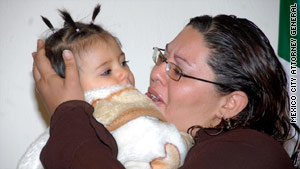

Doctors, five others held in Mexican stolen babies case


Doctors, five others held in Mexican stolen babies case

November 6, 2009 -- Updated 2338 GMT (0738 HKT)
Vanesa Edith Castillo Guzmán is reunited with her daughter Diana Fernanda Castillo.
STORY HIGHLIGHTS
  • Authorities: Doctors, hospital personnel would tell parents that babies had died
  • Three others accused of buying children, registering them as their own
  • One abducted baby has been reunited with mother, officials say

Mexico City, Mexico (CNN) -- Mexican authorities have arrested three doctors, a nurse and a receptionist accused of stealing newborns at a private hospital and selling them, the Mexico City attorney general's office says.

A married couple and a woman also were arrested on charges that they bought two newborn girls and registered them as their own offspring, said Luis Genaro Vasquez Rodriguez, an official with the attorney general's office.

The doctors and hospital personnel would tell parents from whom the children were stolen that their babies had died, authorities said Wednesday.

One of the abducted babies, Diana Fernanda Castillo, has been reunited with her biological mother. Authorities who found the baby and confirmed her identity through genetic tests handed her over to her mother, Vanesa Edith Castillo Guzmán, on Thursday.

Authorities said they arrested Drs. Victor Manuel Mancera Gonzalez, 74; Jorge Adalberto Guerrero Bustos, 55; and Alfredo Ortiz Rosas, 52. Nurse Maria Guadalupe Castro Morales, 58, and receptionist Leonel Rodriguez Mondragon also were arrested, the attorney general's office said in a statement posted on its Web site.

All the suspects were charged with trafficking in minors, using false documents and organized crime.

Other suspects arrested were married couple Antonio Merino Hernandez, 46, and Maria de la Luz Ruiz Padilla, 39, as well as psychologist Cinthia Nayeli Perez Ortiz, 37, officials said. In both cases, authorities said, they were sold babies born in Mexico City's Hospital Central de Oriente.

According to the Mexico City attorney general's office:

Castillo told officials that her daughter was born at 5:11 p.m. October 25, 2008. She never saw her but heard her cry. The mother repeatedly asked Ortiz Rosas to let her see her daughter, but he told her it would be later, once she recovered from the anesthesia and Caesarean section surgery she had undergone.

Later, Mancera Gonzalez told Castillo that her baby had been taken to the "Moctezuma" Infants Hospital. The next day, Ortiz told her, "Your daughter died. There was nothing that could be done for her. She was born with insufficient respiratory ability. I tried to save her, but she died." He also told her the body had been cremated.

Castillo asked the doctor for the baby's ashes or at least a death certificate October 27, and he replied: "I already told you. She died. I took her to be incinerated. There's nothing more to talk about or do. The documents are on the way."

She later received an e-mail from the clinic owner's son in which he told her that her daughter was alive. "Dr. Ortiz placed her with a family and, of course, received a lot of dough," the e-mail said.

The man who sent the e-mail and other witnesses were interviewed, and all said the baby was sold to a couple who lived in the San Vicente municipality in Mexico state.

That's how investigators arrested Ruiz Padilla and Merino Hernandez, who said they adopted the girl. Authorities believed that she was the Castillo's baby, but genetic tests proved that she wasn't.

The couple said the then-7-month-old girl was given to them in April, and she was the daughter of a woman who lived in the Tlalnepantla municipality in the state of Mexico.

They said they never met the biological mother, and their friend gave them signed documents legally turning the girl over to them.

The couple needed help registering the girl as their daughter, and that's how they met Mancera Gonzalez , who charged them 12,000 pesos (about $900).

The continuing investigation led officials to Perez Ortiz, who bought a baby girl for 15,000 pesos ($1,120) in November 2008 and registered the child as her daughter with documents provided to her.

Perez Ortiz told investigators that she first got in touch with another doctor five years ago, telling him she could not have children. The doctor, who is a fugitive, told her he could get her a baby from pregnant women who in many cases would abandon them or wished they would die.

The doctor told her he would persuade the mothers to keep the babies until 6½ months of pregnancy so he could remove them and inject them with a medication to mature their lungs and hearts. Then he would find couples or women who could not have children.

He told the psychologist she would have to pay 10,000 pesos ($750) up front and the remaining 5,000 pesos ($375) when he gave her the baby.

The woman did as told, but the doctor did not come through until late September or early October 2008, when he contacted her to ask whether she was still interested.

A while later, he told her to meet him at the "Puebla" metro station, where he gave her the baby girl. He also gave her a birth certificate showing that the girl had been born at Hospital Central de Oriente.

Genetic tests proved that this was Castillo's daughter.


--
http://www.travelingcloud.typepad.com/shishur_sevay/

Le trafic d’enfants au Liban, un sujet encore bien tabou

Liban

Le trafic d’enfants au Liban, un sujet encore bien tabou
    Par Anne-Marie El-HAGE | 05/11/2009


« La gravité du problème réside dans le manque d’informations », estime Carla Lewis de World Vision.
Société Le trafic d'enfants existe-t-il au Liban ? Si oui, quelles en sont les représentations et quelle en est l'ampleur ? Difficile de le dire en l'absence d'études et de données statistiques.

Sur le même sujet
World Vision sensibilise les enfants

HANCI Refutes Allegations of Child Trafficking

HANCI Refutes Allegations of Child Trafficking


Help the Needy Child International (HANCI) has come under constant pressure by parents whose children were adopted by a United States based organization called Maine Adoption Placement Services (MAPS) a deal believed to have been facilitated by HANCI.
The parents claim that their children were adopted by parents in the US without their consent. On a BBC Net Work Africa Program broadcast on Wednesday 4th November 2009, one of the aggrieved parents who was in tears, demanded that she needed to see her child revealing that she had never signed a document with anybody for adopting her child.
The Executive Director of Help the Needy Child International (HANCI), Dr. Roland Kargbo on Wednesday this week refuted allegations of child trafficking as alleged by the parents. Explaining the legal ramifications of the said adoption case, Dr. Kargbo noted that:
“When HANIC started this operation in Makeni in 1996, a centre was opened for war orphans and abandoned children. This led to the building of an orphanage the same year at the back-of –Birch Memorial Secondary School in Makeni.
When MAPS joined us, we started another orphanage at number three Mission Road in Makeni for children whose parents or guardians wanted them to be adopted overseas, United States to be specific.”   
Dr.Roland Kargbo further explained that: “the home had 33 children but only 23 of them whose adoptions were facilitated by HANCI with the consent of their parents were adopted.” He said it was made clear to the parents that all the 33 children who were kept in the orphanage were kept there for adoption. Dr. Kargbo further explained that each parent completed and signed a document to the effect adding that the agreement was taken to the magistrate court in Makeni for clearance and supervision. He revealed that the said documents were in their possession opened for inspection by interested members of the public.
The Executive director of HANCI pointed out that: “the Ministry of Social Welfare Gender and Children’s Affairs did the adoption; we merely facilitated the links between the biological parents and the parents who wanted to do the adoption. The ministry has addresses of the children and should be able to provide updates about their welfare.”
However, the Ministry of Social Welfare Gender and Children’s had earlier revealed that it would reserve all comments as it was currently investigating the matter.
It added that the said adoptions occurred at a time when they were not in governance and there had recently been a change of minister in the ministry.
Meanwhile, the question of adoption in the ordinary lay Sierra Leonean person’s point of view would be interpreted as a way of helping a parent to raise his or her child for a specific period, with the biological parent reserving the sole parental rights of the child.
This would simply imply that an illiterate parent wanting his or child to be adopted because of poverty would probably fail to grasp the legal implications of what it means to give up a child for adoption.
The question now is would there ever be any hope for the aggrieved parents to see or perhaps just hear from their children who now dwell in America?
By Abdul Samba Brima

Bartholet to testify before Inter-American Commission on Human Rights regarding international adoption policies

Bartholet to testify before Inter-American Commission on Human Rights regarding international adoption policies

Professor Elizabeth Bartholet

Professor Elizabeth Bartholet

Harvard Law School Professor Elizabeth Bartholet ’65 will testify before the Inter-American Commission on Human rights on November 6 regarding the “Human Rights of Unparented Children and International Adoption Policies” in the Americas. The hearing comes after a request made by the HLS Child Advocacy Program (CAP) and the Center for Adoption Policy.

International adoption is the subject of a heated debate among those in the human rights field, and the hearing comes in the wake of policies that have virtually shut down international adoption in Guatemala, Honduras, and Peru.

“Much of the world…focuses on the bad things that happen when kids get placed in international adoption,” said Bartholet, faculty director of CAP. “When you shut down international adoptions in order to address bad things which occasionally happen, what you do is commit monumental human rights violations. We hope to change the debate.”

The hearing represents a major development in the human rights debate surrounding these issues, as the Commission will address human rights violations that to-date have been largely ignored, says Bartholet.

In her testimony, Bartholet argues that restrictions on ethical international adoption violate children’s basic human rights by condemning them to damaging institutions or to the streets. She adds that every child has a right to be placed in a nurturing permanent home, whether that home is in the country of birth or abroad. Adoption abuses should, Bartholet says, be addressed through enforcement and strengthening of laws prohibiting such abuses, not through closing down international adoption and thus denying homes to children.

Bartholet will testify alongside a delegation including: Paulo Barrozo S.J.D. ’09, assistant professor of law at Boston College Law School; and Karen Bos and Charles Nelson, child development experts affiliated with Children’s Hospital in Boston, the Harvard Medical School, and the Harvard School of Public Health.

The delegation will urge the Commission to initiate an investigation to examine what effect closing international adoption opportunities in Guatemala, Honduras, and Peru has had on unparented children.

A recording of the testimony will be available after the hearing at the Inter-American Commission on Human Rights.

STELLING OKTOBER: Een kinderloos echtpaar heeft meer 'recht' op een kind dan ouders met biologisch eigen kinderen - reacties

STELLING OKTOBER: Een kinderloos echtpaar heeft meer 'recht' op een kind dan ouders met biologisch eigen kinderen - reacties
Onderwerpen | Voeg een reactie toe
In de nieuwsbrief van Wereldkinderen wordt maandelijks een stelling opgenomen. Op onze homepage kunt u aangeven of u het wel of niet met deze stelling eens bent. Hier op het forum kunt u uw mening toelichten.
Geplaatst door op 12-10-2009 14:32
Reacties:
12-10-2009 14:30 - Sacha
Adoptie is al zo moeilijk voor elkaar te krijgen tegenwoordig. Het zou fijn zijn als kinderloze echtparen (zoals wij) meer kans krijgen op een kind.
12-10-2009 15:20 - Marlies
Wij hebben al een biologisch eigen kind en willen graag een broertje of zusje voor haar. Ook wij zijn heel blij als we nog een zoontje of dochtertje krijgen. Dat we al een kind hebben, maakt toch niet uit?
12-10-2009 17:08 - Bianca
Doordat mensen met biologisch eigen kinderen ook voor adoptie kinderen in aanmerking komen wordt de kans steeds groter dat mensen zoals wij voor altijd kinderloos blijven. Dit is naar mijn mening een van de oplossingen van de lange wachttijden. Ouders met biologisch kinderen mogen niet meer in aanmerking komen adoptie!
12-10-2009 19:23 - Jolanda
Wat mij betreft maakt de reden waarom je kiest voor adoptie niet uit, wel of niet ongewenst kinderloos.
Volgens mij worden er nog steeds ouders voor kinderen gezocht en geen kinderen voor ouders.
12-10-2009 23:23 - Hans
Nee Jolanda, dat is ook wel zo. Maar het zou dan toch wel extra mooi zijn als de ouders die worden gevonden kinderloos zijn. Ik geloof gelijk dat niet-kinderloze ouders even goede ouders zullen kunnen zijn als kinderloze. Maar geef ons kinderloze ouders ook een kans om een kind op te mogen voeden? We hebben bergen liefde te geven en kunnen deze liefde misschien nooit kwijt aan een kind.
12-10-2009 23:30 - Anoniem
Hallo Bianca,

Die wachtlijst is niet leuk, maar om daarom nou te zeggen dat ouders met geen adoptie(biologisch vind ik zo,n fout woord) kinderen niet meer mogen zouden adopteren een beetje te ver gaan!, en daar komt bij dat ik die wachtlijsten niet goed begrijp als je kijkt hoeveel kindertjes in de kindertehuizen zitten!!
Jammer dat die wachtlijst zo lang zijn!
13-10-2009 07:50 - Adinda
Volgens mij wordt er bij adoptie gezocht naar ouders voor kinderen en niet kinderen voor ouders. Het gaat er dus niet om waar wij allemaal recht op zouden hebben, maar waar de kinderen recht op hebben!
13-10-2009 09:56 - Annalies
Het maakt niet uit of de aanstaande adoptieouders wel of geen biologische kinderen hebben. Geen van beide heeft meer recht op een kind. Het gaat erom dat er voor een kind een passend gezin wordt gevonden.

Als alleen kinderloze ouders in aanmerking voor adoptie zouden komen, zou er per gezin maar 1 adoptiekind zijn. Namelijk zodra er één kind is (bio of adoptie) ben je namelijk niet meer kinderloos.

Misschien zou het te overwegen zijn om een maximum aantal kinderen in een gezin te hebben.
Zeg bijvoorbeeld 4. (alhoewel dat slechts incidenteel voorkomt)

13-10-2009 10:38 - Johanna
Ik begrijp heel goed dat kinderloze echtparen meer kans op een adoptiekind zouden willen hebben. En het is erg verdrietig en teleurstellend dat de wachttijden zo enorm zijn. Toch zouden wij ook nog graag een kind willen. Wij hebben zelf een biologisch kind en zijn secundair kinderloos. Het lukt ons helaas niet meer, na veel miskramen, om op de natuurlijke manier een broertje of zusje voor onze dochter te krijgen. Wij zouden ontzettend graag nog een kindje willen verwelkomen d.m.v. adoptie.
13-10-2009 12:58 - ikke
Wat geeft ons het recht om over een ander te oordelen of die zou mogen adopteren of niet.
Iedereen doet het met zijn eigen motivatie. Wat die motivatie ook is, wij moeten dat van elkaar respecteren.
Kinderloze echtparen hebben verdriet en gemis, maar wie kan oordelen of iemand met al een kind dat verdriet en gemis niet mag voelen voor nog een kindje??

Forum Chiquitines

Welcome to the Forums. Register
If this is your first visit, be sure to check out the FAQ. You may have to register before you can post or search: click here to proceed. To start viewing messages, select a forum below that you would like to view or click View All of Todays Posts.
-->
Forum Categories
User Name
Password
-->-->

Ethiopiërs en Nederlanders ontmoeten elkaar

Ethiopiërs en Nederlanders ontmoeten elkaar
Woensdag 14 oktober 2009 | Suad Farah
Op zaterdag 10 oktober vierde Stichting Ethiopië Morgen (SEM) samen met de Ethiopisch-Nederlandse Vriendschapsvereniging (ENVV) de derde Etnio-Nederlandse ontmoeting in de Johanneskerk in Utrecht.

‘Het belangrijkste aan deze dag is dat mensen elkaar ontmoeten. Mensen met Ethiopische en Nederlandse wortels en dat ze bij wijze van spreken elkaar gewoon aankijken en contact maken’, zegt Jos van Beuren, voorzitter van de ENVV en bestuurslid van SEM.
Drie jaar geleden werd de ontmoeting voor het eerst gevierd door SEM die in 2007 nog Stichting Ethiopië Millennium heette. Ethiopië vierde namelijk pas in 2007 de millenniumwisseling. Ethiopië hanteert de Juliaanse kalender en die loopt 7 jaar en 8 maanden achter op de in het Westen gebruikte Gregoriaanse kalender.

Het aantal bezoekers aan de viering neemt iedere jaar toe. In 2007 bezochten 100 mensen de dag, een jaar later 500 en dit jaar ligt de opkomst op ongeveer 600 bezoekers. Maar het is een schatting, zegt Alem Desta, bestuurslid van SEM, want 'Wij doen niet aan aanmeldingen. Iedereen is vrij en blij om te komen.’

Geld inzamelen
Gedurende de dag werden in de vorm van workshops en 'spreekuren' onderwerpen besproken als de Millennium Development-doelen, jongeren en hun roots, koken op zonne-energie, de NGO-wetgeving. In de avond was er tijd voor entertainment en trad onder meer het kleine circus van Stichting Afrisinia op.
De dag biedt niet alleen Ethiopische en Nederlandse mensen de mogelijkheid om met elkaar kennis te maken, maar biedt bovendien Nederlandse en Ethiopische organisaties de mogelijkheid om zichzelf op een 'markt' te presenteren en geld in te zamelen voor hun projecten in Nederland en Ethiopië.

Werken in Ethiopië
Desta: ‘Op deze dag informeren we Ethiopiërs ook over organisaties als de Internationale Organisatie voor Migratie (IOM.De IOM is een wereldwijde, onafhankelijke organisatie en werkt voor migranten. Ethiopiërs kunnen kennismaken met haar projecten en misschien zelf eraan meewerken.'
Een andere organisatie die zich presenteerde op de 'markt' was IntEnt. IntEnt begeleidt migranten die in het buitenland, vaak het land van herkomst, een onderneming willen starten. De organisatie is actief in de landen Nederland, Suriname, Ghana, Marokko, Curaçao en Afganistan. Iwan Zunder is coördinator Ethiopië en consultant trainingen bij IntEnt.  Zunder meldde zich aan voor deze dag omdat IntEnt van plan is om volgend jaar een Intent Ethiopië te starten. Hij wide bekijken of er mensen mogelijk geinteresseerd zijn in het opzetten van een bedrijf in Ethiopië.
 
Ethiopische adoptiekinderen
Adoptie was een ander, opvallend thema dat op deze dag aan de orde kwam vanwege de aanwezigheid van een adoptiebureau voor Ethiopische kinderen. Frank Weijers was speciaal voor dit onderwerp naar deze dag gekomen. Weijers adopteerde met zijn vrouw hun dochter Selena uit Ethiopië. De dag leek hem een goede manier om in contact te komen met andere adoptie-ouders van Ethiopische kinderen. 'Wat ik het meest interessante vond, was een gesprek die ik had met twee geadopteerde kinderen. Ze zeiden dat het belangrijk is om als adoptie-ouders vooral open te zijn over vragen als "waarom heb je een kind geadopteerd?", "hoe is de adoptie verlopen?".Het is een tip die ik heb meegenomen.’
Identiteitscrisis
Abenet Bakker (25), zelf geadopteerd, herkent de problemen rondom adoptie. Volgens hem heeft een op de twee geadopteerde kind  problemen thuis. Het gaat dan vaak om een identiteitscrisis, die zelfs tot zware depressies kan leiden. Bakker had ook last van een identiteitscrisis, maar daar is sinds zijn bezoek aan Ethiopië verandering in gekomen. ‘Ik ben een jaar in mijn land geweest en toen heb ik ook de negatieve kanten van het land gezien. Maar voor die tijd was ik altijd gefocust op Ethiopië. Nu heb ik veel meer rust gekregen. Misschien omdat ik ook ouder ben.’
Desta concluderend: 'De Etnio-Nederlandse Ontmoeting is dus een dag waarop alles kan gebeuren; informatie-uitwisseling, kennismaken, nieuwe vrienden en nieuwe organisaties leren kennen. Maar het is ook een dag om zaken te doen en te integreren zowel in Nederland als in Ethiopië.’
meer Binnenland »
Bron: Wereldjournalisten
 

AKTUELL ÄTHIOPIEN

AKTUELL ÄTHIOPIEN
Dear Ladies and gentlemen, dear colleagues and friends,
"Eltern für Afrika" is a charitable organization (state-recognized in Germany and Ethiopia) which resumed its work in October 2005. Several years of work to reduce the poverty of children and young mothers within the framework of the help project MM-Africachild e.V. in Ethiopia, combined with the knowledge about the enormous social need of African orphans, brought about the foundation of the organization.
According to the UNICEF-study "Africa's Orphaned Generations UNICEF, Nov. 2003"  20 million African children shall become orphans only because of Aids. African children are orphans also because of poverty, hunger and war.
Already nowadays more than 11 million children are without parents.
The extent of this crisis in orphans overtaxes the traditional solidarity community consisting of relatives and the village community and also overtaxes the African countries and governments in their endeavours to develop democratically and socially. Too many children are in need. This incomprehensible situation has caused us to contribute through social help projects in Ethiopia to the reduction of this need of children and young mothers.
Apart from the domestic help, which is of prime importance, "Eltern für Afrika e.V." sees in the international adoption a very specific and individual possibility to help. The chance is based on the total relief since not only the traditional solidarity communities can give off the charge of the suffering children. Also the African society has the possibility for growth and development in order to manage crises in the long run.
Our work is based on the "Hague Convention" on protection of children and co-operation in the field of "inter-country adoptions". This is also applicable for the co-operation with the countries which do not belong to the undersigned states of the convention.
We consider the legal basis of Ethiopia as unrestrictedly decisive and are in close co-operation with the authorities in charge.
"Eltern für Afrika e.V." maintains an orphanage in Addis Abeba where orphans in need are assembled. The lodging in the orphanage serves the children being taken first care, their care and their becoming healthy. If the possibilities of the national adoption or guardianship are not successful, an international adoption shall be prepared.
If a humane life of the children in their country of origin is not possible and if the children have been declared abandoned by a social authority of their country of origin or if they are orphans, the child's right to warmth and security within a family can be followed by the search for a suitable adoptive family.
Also abroad the rights of the child and of the families must be maintained.
The authorities in the country of origin clarify whether the international adoption provides suitable life perspectives to the child in its personal situation. The placement of a child for the adoption into a foreign country is the last measure if the child can not stay in its original family or if no suitable adoptive or foster family can be found in the home country.
The decision on which child can be placed in which adoptive family is made by the Ethiopian Ministry of Social Affairs.
We are pedagogically and financially responsible for each Ethiopian child which is given into our care by the government.
Our acting is characterized by the wish to meet the need in Africa and by the awareness that we carry great responsibility for the children entrusted in us. The aim of our endeavours is to provide a life worth living for these children.
Orphaned children are mostly exposed to poverty. Poverty means hunger and disease for them, often also the death. For their healthy development children need to a high extent love, security, warmth and reliability.
The children must find these basic conditions in their future family.
To understand a child from Africa in its development requests from the German applicants an intensive dealing with the Ethiopian culture.
Interested parents are informed by us specifically about the country and the people. Also a stay in the country is a prerequisite in this connection in order to sensitize the understanding for the culture from which the children originate.
The adoption proceeding is accompanied by us in three phases. The first phasis includes information, counselling and preparation. Besides a preparatory seminar takes place in which topical data and Ethiopia's specific situation are conveyed.
In the second phasis the social-pedagogical assessment takes place. Here at least two further conversations and one home visit take place. After that we make up a social report about the applicants' aptitude as adoptive parents.
The third phasis is the carrying out of the adoption. The Ethiopian Ministry of Social Affairs proposes a child. At the same time the documents of the applicants from Germany are checked. The adoptive parents stay for at least 14 days in Ethiopia, get to know the child there and are accompanied by our employee to the court hearing.
Also after the effected adoption we are in close contact with the adoptive family.
During the first three years after the adoption the parents have to make up at least 6 development reports about the child which are passed on to Ethiopia. Thus there is the possibility of checking the well-being of the African children which is the most important goal.
The employees of the Ministry of Social Affairs and of the Social and Civil Affairs Bureau as well as the employees of other non-governmental organizations are cordially invited to participate in our social work. We are looking forward to welcoming them as guests not only in ADDIS ABEBA, but also in Germany at specialist events and hope for a productive exchange.
Addis Abeba on the occasion of the opening of the orphanage and the headquarter of Eltern für Afrika e.v.
Raimund Marz-Deibele
Director
Awgichew Ergette
Country representative
 

Godanaw een straatmeisjes project in Ethiopie

Godanaw een straatmeisjes project in Ethiopie

"Godanaw" betekent: "de straat". Het Godanaw Rehabilitation Integrated Project (kortweg: GRIP) bestaat sinds 1995. Het werkgebied van het project beslaat een gebied waarin ruim 100.000 mensen wonen. Naast het opvangen en beschermen van straatkinderen (het hoofddoel), richt het project zich op ontwikkelingsprogramma’s voor de gehele woongemeenschap.
Stichting Afrika heeft in 2002 kennis gemaakt met een onderdeel van het Godanaw project. Enkele projectwerkgroep medewerkers bezochten een opvanghuis, gebouwd van zeecontainers, voor jonge straatmoeders met hun babies. Zij waren erg onder de indruk van het goede werk dat de heer Mulatu, samen met zijn medewerkers, daar deed. De meisjes en hun babies worden tijdelijk opgevangen en verzorgd en dat behoedt ze voor een leven op straat. Bovendien krijgen de meisjes de kans om een beroep te leren, dat hen in staat stelt een inkomen te verwerven, zodat ze niet van prostitutie hoeven te leven.
Wilt u helpen?
Graag willen wij dit project steunen door bijvoorbeeld regelmatig melkpoeder voor de babies aan te schaffen. Maar ook verzorgingsproducten voor de meisjes (toiletartikelen en dergelijke) zijn hard nodig. In de komende jaren wil de heer Mulattu de volgende projecten realiseren:
·         Een multifunctioneel jongerencentrum: waar jongeren een opleiding kunnen volgen en tegelijk worden voorgelicht over hygiëne en bijvoorbeeld de gevaren van AIDS. Dit is een heel goed alternatief voor het rondhangen op straat.
·         Huisvesting voor jonge straatmoeders en hun babies, waar de jonge vrouwen enkele jaren kunnen wonen als overgang van het straatmeisjes-project naar volledig zelfstandige huisvesting.
·         Hygiëneprojecten in wijken: Dit houdt onder andere in dat er op verschillende plaatsen in de wijk waterpunten met stromend water aangelegd worden, dat er toiletten gerealiseerd worden en dat er afvalcontainers verdeeld door de wijk geplaatst worden.
Mocht u nu al meer willen weten over deze projecten, kunt u contact opnemen met het contactadres.
«« terug