Home  

From Noida to Nagaur, couple wants to adopt newborn found in garbage

From Noida to Nagaur, couple wants to adopt newborn found in garbage ANI | Updated: Jun 16, 2019 14:51 IST RELATED NEWS 21.6.2019 From Noida to Nagaur, couple wants to adopt newborn found in garbage https://www.aninews.in/news/national/general-news/from-noida-to-nagaur-couple-wants-to-adopt-newborn-found-in-garbage20190616145134/ 2/11 Nagaur (Rajasthan)[India], Jun 16 (ANI): After being found in a garbage dump, Pihu now looks at a bright future with a journalist couple making efforts to adopt the abandoned newborn. The couple on Sunday met the Nagaur District Collector in order to inquire about the legal procedure to make the baby girl a part of their family. "We are trying our best to initiate the legal procedure in order to adopt the child. In this regard me and my wife met the Nagaur Collector in order to understand the adoption procedure," Vinod Kapri (/search? query=Vinod Kapri), a filmmaker and journalist, told ANI. Before meeting the Collector, Kapri and his wife Sakshi Joshi (/search?query=Sakshi Joshi), a TV news anchor went to JLN Hospital to meet the baby and enquired about her condition. On getting to know that the child's condition is improving, the couple travelled straight from Noida to Nagaur to inquire about the legal procedure. After battling for her life, the newborn is now stable. 21.6.2019 From Noida to Nagaur, couple wants to adopt newborn found in garbage https://www.aninews.in/news/national/general-news/from-noida-to-nagaur-couple-wants-to-adopt-newborn-found-in-garbage20190616145134/ 3/11 TAGS Newborn (/search/?query=Newborn) "The present condition of the child is stable, however, she is having a recurring problem in breathing," said Dr Mula Ram of JLN Hospital. A video of the newborn lying helplessly on a mound of garbage caught the couple's attention. On watching the viral on social media, they named the child Pihu. Kapri tweeted photos from his hospital visit and wrote, " A BIG shout out for team of Doctors at JLN Hospital , Nagaur , Rajasthan. Dr RK Sutaar and team , you guys are simply superb. Thanks again for taking care of little one and other new borns." While his wife Sakshi also tweeted Kapri's photos with the baby. "This is final post from me. The whole Kapri family is dying to have her in the family. We will try our BEST to adopt her as per rules and guidelines. The whole Thanks a lot for all your love and support #HappyFathersDay," she wrote alongside.

(ANI)

Neither ACT / ARC mentioned nor Malaysian Social Service Country Profile: India – People for Ethical Adoption Reform

Country Profile: India

India has been a sending country for adoptions across North America, Australia, New Zealand, and Europe since the 1970s. There was little oversight prior to 1984, when India instituted the Central Adoption Resource Authority (CARA) as a governing body to monitor adoptions. According to statistics from the Department of State, from 1999-2017, there were 5946 adoptions from India to the USA. Despite attempts toward better practices in Indian adoption, several trafficking scandals have been uncovered between NGOs and agencies, and we still do not know the full breadth of unethical practices in Indian adoptions.

Is this a Hague country?

People for Ethical Adoption Reform - Board of Directors

Board of Directors

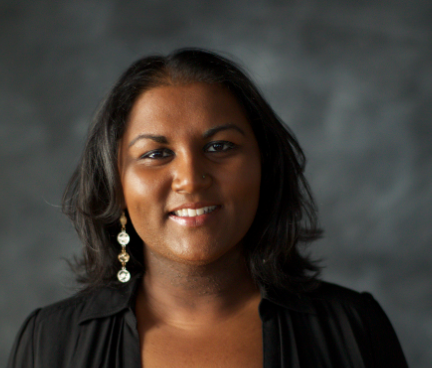
Cherish Bolton (Co-President) is an intercountry adoptee from India. She is a historian who researches the legal and social status of vulnerable children in India. She has an MA in history and is completing her doctorate.

Chantal Rich (Co-President) is an intercountry adoptive parent (DRC) and domestic adoptee (USA). She is a licensed MSW and focuses on adoption and childhood trauma.

Nicki Clark Bradley (Vice President/Secretary) is an intercountry adoptive parent (Vietnam). The Baby Scoop Era impacted several members of her family, which drove her to work in adoption advocacy. She spent time on the Board of Ethica and founded Voices for Vietnam Adoption Integrity.

Adoptiert wider Willen

Shareable link: https://drive.google.com/open?id=1Pc-XVm8n7VpWvtocdmURc60Ixuo7YMqV


Aalsterse adoptieouders schrijven open brief over ‘Denderracisme’: ‘Onze kinderen worden steeds vaker geviseerd’

Aalsterse adoptive parents write open letter about "Dender Racism": "Our children are being fished more often"

Vincent Laurent (38) and Kim Weyenberg (38) from Aalst have written an open letter in which they denounce the emerging "Dender racism". They are the happy adoptive parents of two Getinat-Tijl (8) and Saron-Fleur (7), from Ethiopia. "We notice that our children are being fished more often and have to do their best more than other children," they write. RUTGER LIEVENS20 June 2019, 11:21 The open letter from Vincent and Kim was posted on Facebook yesterday and has since been shared more than a thousand times. The immediate reason is the racist hate letters that have been coming to Aalstenaars with foreign roots in recent weeks, but Dender racism has been going on for some time, say the concerned parents.

EDUCATION IN THE LAND OF MISTER CHOCOMOUSSE

"Just on the day that the news about the" go back to your country "postcard came to the people of the Irish pub, we were once again confronted with racist reactions on the street in Aalst," says Vincent. “I was going to pick up my children from school and we are running through the day in the Lange Zoutstraat when an elderly lady looks at us from head to toe. "Isn't that terrible now," she says. My wife answered: "Excuse me!" She received the answer: "Those children don't belong here, they have to go back to their country," says Vincent. According to the couple, the former living room racism is now generally accepted on social media. "I thought it would be useful to take a look at some of the facts of the past nine months," writes Vincent in his letter. “In September 2018 the Pano report from Schild & Vrienden was published. The extreme right-wing club of Dries Van Langenhove, calling primarily online to take action against the multicultural society ... In the autumn of 2018, "Mister Chocomousse" from Ninove won a monster score during the municipal elections. Guy D’haeseleer succeeded in convincing a very large group of people that he could turn the tide with an anti-immigration policy, among other things. ”

BURGEMEESTER REFUSES TO CONDUCT THE TROLLEY

Mayor Christoph D’Haese (N-VA) is also mentioned in the letter: “The mayor of Aalst refused to condemn the racist float that took part during the Aalst carnival parade. It may cost the city its Unesco recognition. And why? For a few extra preference votes? Even under pressure from his own party chairman, he refused to reject this "satire." Because is that right? To laugh? You have to be able to put that into perspective, you hear. Well, racism is not relative and it has never been: it is absolute. It is there or it is not there, "write the parents. They do not understand that there is so much stupidity in the world. "Our children have not chosen to be adopted," write the parents. “In fact, no child chooses that! We have tons of respect and understanding for the courageous choice that the biological mother of our children has made and do our utmost to shower them with all the love of the world. We are just trying to be a happy family. Who can object to that? "

Orphanage Reunion

Orphanage reunion

Published by editor on Wed, 06/19/2019 - 8:59am
By: 
Lisa Ingebrand

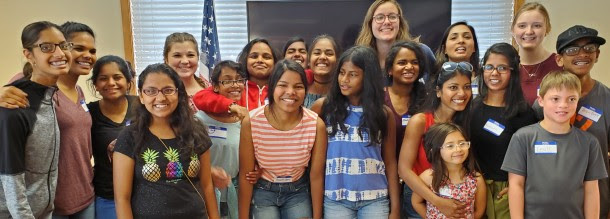
Seventeen adoptees and their families gathered at The Village in Waterville to celebrate adoption, share their stories, and reunite. Lisa Ingebrand Photo

She grew up in an orphanage in eastern India and witnessed the adoption of many of her childhood friends. Their final destinations were unknown to her, but her memories of them never faded.
Then, it was her turn.
In 2012, Hardeep Kanne left Basundhara, an orphanage in Orissa, India. She was later adopted by Julie and Dave Kanne of Morristown in August 2016. She was 16 when she joined the Kannes' other adopted daughters, Anamika and Ariana, who are also from India. Even more special, Anamika and Hardeep were from the same orphanage.
Hardeep was happy with her new family, but she always remained curious about what became of her childhood friends from the orphanage. So, she began looking for them, using Facebook, and in 2017, held a large reunion at the Kannes' home on Cedar Lake.
"I think we had like 80 people at the house," laughed Julie Kanne. "It was a lot of fun, but when we decided to do it again, we thought this (The Village in Waterville) would be a better site."
Last Friday, 17 adoptees and their families gathered for a weekend-long Celebrate Adoption event in Waterville.

Pick up the June 20, 2019, edition of the Lake Region Life or The Elysian Enterprise to read about the event.

Apex Sumi student body reaffirms resolution on adoption of child

All Sumi Students’ Union (Sumi Kiphimi Kuqhakulu-SKK) has reiterated the stand on adoption of child by Sumi couples and reaffirmed its commitment to preserve the traditional paternal lineage of inheritance. 

In a press release, SKK president Atokiho Sumi and general secretary Hutoshe Kits said that SKK would want the inheritance matters of Sumi to continue on ‘paternal’ and not on ‘maternal’ basis.
They said that SKK at its 2nd union assembly resolved to preserve and protect the inherent rights of the Sumi and out rightly oppose anybody or authority that “attempt to contaminate the strong fabric of the Sumi cultural identity where the kingship is based on bloodline inherently.” SKK also affirmed that it would not tolerate any move that attempted to snatch ‘Sumi birth right’ by adopted children at any level.
The union affirmed that its stand was in line with NSF standing resolution “Nagas by Blood, not by Adoption”.
SKK maintained that any opportunity— be it government service, technical studies or inheritance of property, would be based purely on “Sumi by blood, not by adoption”.  
The union said it does not oppose adoption of child by anybody/couples. SKK, however, stated that it would encourage any Sumi couple to do so on blood line so as to avoid any future complications or deprivations.
SKK has, therefore, called upon its constituent units to be vigilant at their respective level and report the matter to SKK office for further course of action. 
SKK also urged all responsible authority to respect the rights of the Sumi and not to entertain any doubtful identity/candidate, especially government jobs seekers and get proper verification from SKK. 
The apex Sumi student body asserted that it would not entertain any recommendation/approval of such doubtful identity and would fix the responsibilities on the concern recommending/approving authority in the event of any discrepancy that arose in its “resolute pursuance to preserve its customary practices and to protect our inherent rights from being invaded by the outsiders.”

Internationale adoptie meestal niet in belang van het kind

International adoption is usually not in the child's interest

For a long time, adoption was an act of love. According to Prakash Goossens, adopted from India at the age of eight in 1985, that image needs to be adjusted. In the case of international adoption, the adoptive parents were the main focus. The interests of the child and the place of the biological parents remained underexposed to this day. Kelly Keasberry “Until ten years ago it was assumed that adoption was in the best interests of the child. The only criterion was material progress and in return gratitude was expected from the child. If you were integrated into a normal Fleming or Belgian, the business was closed. Only recently has there been a growing awareness that adoption is sometimes linked to serious trauma. I myself was shocked that an adopted child applied for euthanasia while supposedly there was nothing wrong with society. Depressions, addictions and suicide attempts are indications that something more fundamental is going on with adopters, "says Prakash Goossens. No aftercare “The first forms of modern adoption were created during and after the First World War. There were many displaced children back then. They were adopted in the US and Canada, but also in Belgium. The adoption as we know it today dates from the beginning of 1960 and peaked between 1980 and 2002. I was adopted in 1985. The intention for adoption shifted from pure charity to family formation. It was an ultimate remedy for fertility problems. No one asked questions. After adoption scandals in the 1990s, adoption legislation would increasingly be in the best interests of the child. The Children's Rights Convention (1989) and the Hague Adoption Convention (1993) led to stricter legislation on adoptions. What is now well arranged is the procedure from intake to adoption. Nevertheless, things still go too wrong after adoption. Up to now, no follow-up care has been provided for adult adopters. While many problems of a psychosocial nature come to the fore just then, "Goossens knows.

Primordial wound

“Psychotherapist Nancy Verrier states in The Primal Wound of 1993 that it is particularly difficult to restore the adhesion of adopted people. By breaking that bond "roughly", a primitive wound is created in the child. That wound determines everything that the adopted child experiences, feels and expresses in word and behavior in his later life. According to trauma expert Bessel van der Kolk, a trauma also changes the brain structure. This influences the language skills, the psycho-emotional stability and the development opportunities of the child. The first 45 minutes after birth are crucial according to that expert. If there is attachment to the mother then, the body adjusts, but if there was no one to comfort or grasp the child, the body creates a shutdown. As a result, the brain structure changes thoroughly and the trauma short circuit closes the connection to the emotional part of the brain. As a survival strategy, the brain creates an "unreal". An upper layer is created on the original personality and then it develops further. Often the person only discovers in therapy that his original personality comes to the surface, "Goossens continues.

“Adoption children usually adapt well. But because the body remains in the survival mode and therefore under constant high voltage, the child will be suspicious and will not attach easily. Verrier states that attachment precedes love. Love is not a condition for attachment. Safety and security are crucial. Even adoptive parents who have done everything will never be able to heal that primeval wound. " Adopted people encounter a lot of misunderstanding. “Society only sees that you grew up in a loving family and were given every opportunity. She does not see the taboos and the sorrow because you have never known your biological parents. She doesn't know what it's like to never feel 100 percent at home. To always remain a stranger. Certainly if you then have a different skin color. ”Nevertheless, Goossens states that that primeval wound does not have to be paralyzing. “The wound can be transformed; it can become a source of motivation, a creative drive, a desire for unity that is fundamentally good and healing. Our deepest pain can transform us if we want to. However, the brokenness caused by that primeval wound is so deep that our society must respond positively. There is an urgent need for a psychosocial aftercare package for adopters and adoptive parents. "

Historical lie

Goossens argues for historical research after 50 years of international adoption. “In Belgium we are easily involved in 38,000 intercountry adoption dossiers; in the Netherlands there are 54,000. The legality of the documents supplied is sometimes questionable. Little attention was paid to documentation and, above all, they wanted to protect the anonymity of the biological mother. In the last few months, more and more files have appeared in newspapers and media that make it clear that things have happened that really cannot get through. For example, most orphans are not full orphans at all. Many biological parents were looking for a temporary solution in orphanages and were shocked to find that their child was gone or they were even told that it had died. "

Recognition

The interpretation of charity with regard to adoption was far too one-sided. The Hague Adoption Convention says very clearly that poverty cannot be a criterion for adoption. “The Indian state's motto is: Truth alone triumphs, only the truth triumphs. Now there is the opportunity for adoption services, governments, politicians and Child & Family to take their responsibility. Adoptive children are entitled to social recognition that something serious has gone wrong. That is precisely why it is a historical lie to pretend that adoption was only in the best interests of the child. There are enough options to help a child in the country of origin. We help with that more than by taking it away from the biological parents, "says Goossens." III

Dutch:

Adoptie gold lange tijd als een daad van liefde. Volgens Prakash Goossens, in 1985 op achtjarige leeftijd geadopteerd uit India, moet dat beeld worden bijgesteld. Bij internationale adoptie stonden vooral de adoptieouders centraal. Het belang van het kind en de plaats van de biologische ouders bleven tot op vandaag onderbelicht.

Kelly Keasberry

“Tot tien jaar geleden ging men ervan uit dat adoptie in het belang van het kind was. Het enige criterium was materiële vooruitgang en in ruil werd van het kind dankbaarheid verwacht. Als je geïntegreerd was tot een gewone Vlaming of Belg, dan was de zaak gesloten. Pas sinds kort groeit het besef dat adoptie soms gelinkt is aan ernstige trauma’s. Zelf was ik geschokt dat een adoptiekind euthanasie aanvroeg terwijl er zogenaamd voor de samenleving niks aan de hand was. Depressies, verslavingen en zelfmoordpogingen zijn indicaties dat er toch wel iets fundamentelers aan de hand is met geadopteerden”, zegt Prakash Goossens.

Geen nazorg

“De eerste vormen van moderne adoptie ontstonden tijdens en na de Eerste Wereldoorlog. Er waren toen veel ontheemde kinderen. Die werden geadopteerd in de VS en Canada, maar ook in België. De adoptie zoals we die nu kennen, dateert van begin 1960 en piekte tussen 1980 en 2002. Ik ben in 1985 geadopteerd. De intentie voor adoptie verschoof van pure caritas naar gezinsvorming. Het was een ultimum remedium voor vruchtbaarheidsproblemen. Niemand die zich vragen stelde. Na adoptieschandalen in de jaren 1990 zou de adoptiewetgeving steeds meer in het belang van het kind komen te staan. Het Kinderrechtenverdrag (1989) en het Haags Adoptieverdrag (1993) leidden tot een verstrengde wetgeving rond adopties. Wat nu goed geregeld is, is de procedure van de intake tot aan de adoptie. Toch loopt het na de adoptie nog altijd teveel mis. Er is tot nu toe in geen nazorg voorzien voor volwassen geadopteerden. Terwijl heel veel problemen van psychosociale aard juist dan naar boven komen”, weet Goossens.

Oerwond

“Psychotherapeut Nancy Verrier stelt in The Primal Wound van 1993 dat het bijzonder moeilijk is om bij geadopteerden de hechting te herstellen. Door die binding ‘ruw’ te verbreken, ontstaat bij het kind een oerwond. Die wond bepaalt alles wat het adoptiekind in zijn verdere leven ervaart, voelt en tot uiting brengt in woord en gedrag. Volgens trauma-expert Bessel van der Kolk verandert een trauma ook de hersenstructuur. Dat beïnvloedt de taalvaardigheid, de psycho-emotionele stabiliteit en de ontwikkelingskansen van het kind. De eerste 45 minuten na de geboorte zijn volgens die expert cruciaal. Als er toen hechting met de moeder heeft plaatsgevonden, past het lichaam zich wel aan, maar als er niemand was om het kind te troosten of vast te pakken, dan creëert het lichaam een shutdown. Met als gevolg dat de hersenstructuur grondig wijzigt en door die traumakortsluiting wordt de verbinding met het emotionele deel van de hersenen afgesloten. Als overlevingsstrategie creëren de hersenen een ‘onecht ik’. Er ontstaat een bovenlaag op de oorspronkelijke persoonlijkheid en die ontwikkelt zich dan verder. Vaak ontdekt de persoon pas in therapie dat zijn oorspronkelijke persoonlijkheid komt bovendrijven”, vervolgt Goossens.


“Er is dringend nood aan een psychosociaal nazorgpakket voor geadopteerden en de adoptieouders”, zegt Prakash Goossens.  © kk

“Adoptiekinderen passen zich meestal goed aan. Maar doordat het lichaam in de survival-modus en dus onder constante hoogspanning blijft, zal het kind wantrouwig zijn en zich niet gemakkelijk hechten. Verrier stelt dat hechting voorafgaat aan liefde. Liefde is geen voorwaarde voor hechting. Wel veiligheid en geborgenheid zijn cruciaal. Zelfs adoptieouders die alles hebben gedaan, zullen nooit die oerwond kunnen helen.”

Geadopteerden stuiten op veel onbegrip. “De samenleving ziet alleen dat je in een liefdevol gezin bent opgegroeid en alle kansen kreeg. Ze ziet niet de taboes en het verdriet omdat je je biologische ouders nooit hebt gekend. Ze weet niet hoe het is om je nooit 100 procent thuis te kunnen voelen. Om altijd een vreemde te blijven. Zeker als je dan nog een andere huidskleur hebt.” Toch stelt Goossens dat die oerwond niet verlammend hoeft te werken. “De wond kan worden getransformeerd; het kan een bron van motivatie worden, een creatieve drive, een verlangen naar eenheid die fundamenteel goed en helend is. Onze diepste pijn kan ons transformeren, als we dat willen. De gebrokenheid door die oerwond is echter wel zo diep dat onze samenleving daar een positieve respons op dient te geven. Er is dringend nood aan een psychosociaal nazorgpakket voor geadopteerden en de adoptieouders.”

Historische leugen

Goossens pleit voor historisch onderzoek na 50 jaar interlandelijke adoptie. “In België zitten we gemakkelijk aan 38.000 interlandelijke adoptiedossiers; in Nederland zijn dat er 54.000. De legaliteit van de aangeleverde documenten is soms twijfelachtig. Voor documentatie was weinig aandacht en men wilde bovenal de anonimiteit van de biologische moeder beschermen. De jongste maanden komen er steeds meer dossiers in kranten en media die duidelijk maken dat er zaken gebeurd zijn die echt niet door de beugel kunnen. Zo zijn de meeste weeskinderen helemaal geen volle weeskinderen. Veel biologische ouders zochten een tijdelijke oplossing in weeshuizen en moesten tot hun schrik vaststellen dat hun kind weg was of ze kregen zelfs te horen dat het was overleden.”

Erkenning

De invulling van caritas met betrekking tot adoptie was veel te eenzijdig. Het Haags Adoptieverdrag zegt heel duidelijk dat armoede geen criterium kan zijn voor adoptie. “Het motto van de Indiase staat is: Truth alone triumphs, enkel de waarheid triomfeert. Nu is er de kans voor adoptiediensten, overheden, politici en Kind & Gezin om hun verantwoordelijkheid te nemen. Adoptiekinderen hebben recht op de maatschappelijke erkenning dat er iets grondigs is misgegaan. Juist daarom is het een historische leugen te doen alsof adoptie alleen in het belang van het kind was. Er zijn genoeg mogelijkheden om een kind in het land van herkomst te helpen. Daarmee helpen we meer dan door het bij de biologische ouders weg te nemen”, vindt Goossens.”  III


Bio

Prakash Goossens (1977) studeerde rechten en internationale politiek aan de KU Leuven, de UCL en de Université Robert Schumann in Straatsburg. Momenteel is hij internationaal vertegenwoordiger voor Fracarita International, een ngo van de Broeders van Liefde.
Couple use Twitter to rescue newborn girl abandoned on Indian garbage dump

(CNN)Vinod Kapri, an Indian filmmaker based in New Delhi, checks Twitter first thing every morning -- like virtually every journalist on the planet.

On Friday, something amid the relentless stream of content caught his attention: a graphic video of a newborn baby, who was left abandoned on a garbage dump, naked and wailing.
Almost moved to tears, Kapri showed the video to his wife Sakshi Joshi, who is also a journalist. "We were very upset," Kapri told CNN. "I couldn't watch the whole video -- I could hear her crying and that was enough," Joshi said.

Both immediately knew what to do. "Our conversation suddenly shifted to: 'We should adopt her," Joshi added.
So Joshi tweeted a request to her followers to send over any information they could find about the baby, saying she and Kapri wanted to adopt her if they could locate her.
"We had no idea of the location of the video or its authenticity," Kapri said. "We see many fake videos of babies on social media."
In a couple of hours, Joshi's tweet -- and her husband's following post in English -- went viral, with hundreds of netizens searching for clues that could allow the couple to locate the girl.
"Everybody on Twitter was keen to find the girl," Joshi said. "Twitter had the biggest role in the whole story."
"Everybody has (their) own ideology and opinions, but this was beyond ideology. It shows that humanity still exists, calling to everyone in this world," she added.
Thanks also to their journalistic sources, the couple started to get some leads that the girl was found in Rajasthan.

So Kapri asked one of his former colleagues and friend, Rahul Choudhry, to go and find her "on a personal level."
Choudhry found out the baby girl had been admitted in a serious condition to the Jawaharlal Nehru Government Hospital in the city of Nagaur. He visited the facility and sent a video of her to Kapri, who immediately tweeted it to his followers.
"Then we had a long chat with the doctor and we told him we had the intention of adopting the baby. Even though we're not legal parents, we already felt emotionally connected," Kapri said.

The doctor told him that the baby was doing well and that only her weight, 1.6 kg (3.5 pounds), was cause for concern. But he invited Kapri and Joshi to come to Rahjahstan to see the baby.
So on Saturday, the couple drove 500 kilometers (311 miles) to Nagaur.

In the meantime, they asked their Twitter followers about the adoption process.
"We never had any intention of adopting a baby. I'm already 46," Kapri said. "We had no idea about the process. We started researching and we found out that adoption is quite tedious and long in India."
"We are both going to do our medical checkups, the application will take 2-3 more days," he added.
Once they got to the hospital, words failed them.
"I can't express my feelings ... what me and my wife felt was just beyond words, I completely lost my words. Inexplicable," he said.
And on Father's Day, Joshi tweeted a picture of the three of them together, saying: "The whole Kapri family is dying to have her in the family."

As a temporary name, Joshi and Kapri decided to call her "Pihu," which was suggested by some Twitter users.
"It's the name of a bird and a film I directed. The main character has a 2-year-old," Kapri said.
CNN has reached out to the hospital for comment.