Home  

Commissione Bicamerale per l’Infanzia, presentata la proposta di Ai.Bi. contro la crisi dell’adozione internazionale

Data: 18-09-12

Autore: Marco Maccari

Roma: Commissione Bicamerale per l’Infanzia, presentata la proposta di Ai.Bi. contro la crisi dell’adozione internazionale. Sen. Serafini: “Un Paese che non crede nelle adozioni internazionali è un Paese debole!”

ROMA, 18 settembre 2012 – Con la presentazione in Commissione Bicamerale per l’Infanzia della proposta di riforma della legge 184/1983, elaborata da Ai.Bi. per più adozioni internazionali e più famiglie adottive, è iniziata la fase di confronto istituzionale sui sei punti della riforma.

La proposta presentata dalla delegazione di Ai.Bi. – composta da Marco Griffini, Presidente, dall’avv. Enrica Dato dell’Ufficio Diritti dei Minori e da Marzia Masiello, Relazioni Istituzionali – nell’ambito della indagine avviata dalla Commissione il 6 marzo 2012 circa lo stato di attuazione delle norme vigenti sull’adozione, è stata accolta con grande interesse e attenzione dai parlamentari membri della Commissione.

A Wiltshire-based Christian charity is hoping a royal documentary will boost support for the work it does in Romania.

Wednesday, November 19, 2008, 11:36

Be the first to comment<http://www.thisisbath.co.uk/news/Royal-s-TV-backing-aid-charity-Romania/article-485696-detail/article.html#StartComments>


A Wiltshire-based Christian charity is hoping a royal documentary will boost support for the work it does in Romania.

The country was recently the focus of an ITV programme with Sir Trevor McDonald, in which the Duchess of York visited a series of children's homes.

Sarah Ferguson and her daughters revealed the plight of orphans in Romania and Turkey and are now hoping to push for better human rights legislation.

Robin Hood Ministries, which until recently was based in Bradford on Avon but is now in Trowbridge, is currently working with The Way of Joy centre in Iasi, in the north of the country.

It hopes the publicity from the programme will encourage people to get more involved with its own projects in Romania and other countries.


[http://iad.anm.co.uk/anmdefaultad.gif]<http://ads.anm.co.uk/ADCLICK/CID=fffffffcfffffffcfffffffc/AAMSZ=452x118/SITE=THISISBATH/AREA=NEWS/SUBAREA=/ARTICLE=485696/acc_random=3667370562/pageid=/RS=10180.10309.10187.10245.10177.10208.10213.10215.10216.10242.10257.10262.10278.10289.10253.10297.10307.10323.10344.>


The charity is trying to help people who cannot access proper housing, medical facilities and education, the same as those featured in the programme.

To give British people the chance to understand the way some Romanians live, the charity is offering trips to the country.

One of the organisers, Val Huxley, pictured, said: "I challenge anyone to come on one of our Awareness Trips. It's here that you will experience the true meaning of poverty.

"Visiting families living in concrete blocks with no heating, lighting, sanitation or running water is a grounding experience."

The charity also runs a child sponsorship scheme, where for just ?20 a month a child can receive basic medication, food, clothing and education.

To celebrate the charity's fifth birthday, a dinner will be held at the Homewood Park Hotel at Hinton Charterhouse next Thursday. Tickets cost ?30 and the charity is also appealing for firms to donate prizes for a secret gift auction on the night.

For more information about Robin Hood Ministries, contact 01225 712048 or visit www.robinhoodministries. org.


Recession increases number of children abandoned: CWLF

Recession increases number of children abandoned: CWLF

The China Post news staff--Figures show that every day 1.7 families want to put their children up for adoption, according to statistics released by the Child Welfare League Foundation (CWLF, ???????????).

The average number of abandonment is one child per day, according to data compiled by the Ministry of the Interior (MOI, ???). Phone calls inquiring about putting children up for adoption have increased by 50 percent year-on-year in August, said CWLF, adding that since 2007, there have been 169 cases of infant abandonment resulting in 28 deaths; furthermore, there have been 17 abandonment cases in the first eight months in this year alone, more than the total number of last year.

Abandonment cases related to teen pregnancies and children born out of wedlock make up 30 percent of all cases, according to the MOI.

Past surveys conducted by the CWLF show that 75 percent of parents who abandon their children do so out of economic reasons. The CWLF said that living expenses have increased significantly this year; parents who are incapable of supporting their children often end up abandoning them.

In an effort to curb this phenomenon, the CWLF has organized charity events aimed at reaching out to the public in an effort to raise awareness, advocate against child abandonment, as well as raise money to help abandoned children.

Adoption rates have not been climbing fast enough to counter the rapidly growing number of abandonment cases. Each child has to wait an average of 510 days for adoption procedures. Last year, 30 percent of adopting parents only accepted infants below the age of one, while 74 percent did not accept children above the age of three. Chances for children over the age of five to be adopted dropped to 5 percent, according to the CWLF. Children with health deficiencies or of foreign backgrounds usually had to wait two to three times the amount of time to find a family willing to adopt them, said the CWLF.

North Korea - House passes adoption bill

House Passes Adoption Bill

2012-09-12

US lawmakers vote to remove barriers for adopting North Korean refugee orphans.

AFP

Malnourished children in North Korea's North Hamgyong Province, June 20, 2008.

The U.S. House of Representatives has passed a bill aimed at streamlining procedures for American families wanting to adopt North Korean orphans, termed as “some of the world’s most endangered children.”

The North Korean Refugee Adoption Act, adopted on Tuesday, directs U.S. Secretary of State Hillary Clinton, in consultation with the Secretary of Homeland Security, to develop a strategy to “facilitate the adoption of North Korean refugee children” by families in the U.S.

The legislation also requires that the State Department issue a report to Congress on that strategy within 180 days of its enactment.

Ileana Ros-Lehtinen, the Republican Chairman of the House Committee on Foreign Affairs, said that while many North Koreans face extreme repression, malnutrition, and poverty, those threats often take the greatest toll on the country’s children.

Thousands of North Koreans facing starvation and disease have fled the country and now live as refugees in China, Mongolia, Thailand and other Southeast Asia nations where they remain susceptible to human trafficking and are at risk of being repatriated and facing persecution.

“Imagine what happens when a child’s natural protectors—parents—are no longer in the picture. And imagine what happens when that child is born or orphaned inside China where the child lacks legal status, or dependable access to social services,” she said.

“Malnutrition, abuse, exploitation, lack of education—these are the horrors that are faced by orphans of North Korean origin who are effectively stateless and without protection.”

She went on to say that the U.S. is home to the largest Korean ethnic population outside of Northeast Asia and that many of the nearly two million Americans of Korean descent have family ties to North Korea.

“Numerous American families would like to provide caring homes to these stateless North Korean orphans,” she said.

The legislation “is a responsible first step towards making that possible.”

It was co-sponsored by Republican Representative Ed Royce and Democratic lawmaker Howard Berman.  A similar bill is being considered by a Senate panel.

‘At great risk’

Ros-Lehtinen said that the bill would require the State Department to “take a broad look” at the diplomatic and documentation challenges facing American families who seek to adopt the refugee orphans.

“Doing the right thing is not always easy. I especially want to applaud those adoptive parents—both past and future—who invest their own lives and homes to provide loving families for some of the world’s most endangered children,” she said.

Berman, the top Democrat on the House Foreign Affairs Committee, said the U.S. has a moral obligation to help North Koreans suffering rights abuses.

“As innocent men, women, and children flee the repressive North Korean regime at great personal risk, we have a moral obligation to assist them,” he said.

“This bill, H.R. 1464, is not merely about adoption, but also an issue of human rights for the North Korean people.”

The State Department’s most recent annual report on human trafficking kept North Korea at the lowest ranking of all nations, citing estimates that as many of 70 percent of the thousands of undocumented North Korean refugees in China are females, many of whom are trafficking victims.

Most commonly, women and girls from one of North Korea’s poorest border areas cross into China and are then sold and re-sold as “brides.”

Aid workers estimate that there are some 2,000 "defector orphans" in China, with a possible total of 30,000 North Korean defectors living in hiding, mostly driven over the border to look for food and work.

"Stateless orphans," on the other hand, are born out of relationships between North Korean women and Chinese men, with their mothers subsequently deported to North Korea.

"Stateless orphans" are currently believed to number 10,000-20,000, and are unable to get an education because they lack official Chinese papers. Late registration of children without papers costs 5,000 yuan (U.S. $790), around three times the monthly salary of the average Chinese person, aid workers said.

Reported by Joshua Lipes.

Adoption: One man's quest to find his identity

Adoption: One man's quest to find his identity

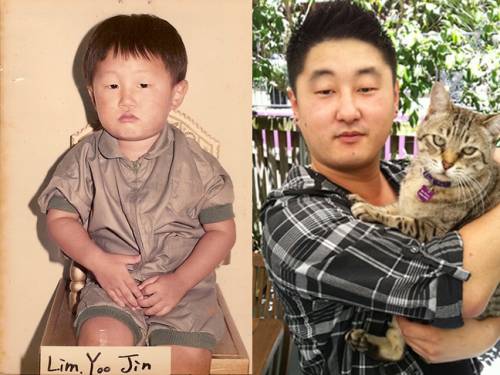
Tim Fredericks was born in South Korea, and adopted by an Australian family.

Tim Fredericks was born in South Korea, and adopted by an Australian family.

Tim Fredericks was adopted from South Korea as a baby. While he has had a loving and supportive upbringing, a lingering feeling of loneliness drove him to seek out his birth mother.

As a child, Tim Fredericks felt like every other kid – he went to school, played sport and hung out with friends and family.

“I felt normal like everybody else,” says Mr Fredericks, now 29 and a graphic designer.

“But when I tell people I’m adopted, they ask me a million questions and that makes me feel like I’m not normal.”

“I think the worst thing you can say to someone who is adopted is ‘sorry’. I know some people don’t mean any harm but I don’t feel like there is anything wrong with being adopted.”

Mr Fredericks was adopted from South Korea when he was three years old, and grew up in an ethnically mixed area on Sydney’s north shore.

Adopted into an Australian family of five that included an Australian adopted brother and Korean adopted sister, Mr Fredericks says he grew up in a loving and supportive family.

Yet, Mr Fredericks always felt lonely.

"I felt like I was born alone,” he says.

“That loneliness lingers on throughout life. It’s a little bit like identity crisis, not knowing your roots.”

“You only know what you look like in your own reflection but you don’t know the roots to your reflection.”

Mr Fredericks said he had used this as a source of strength in his life.

“I didn’t really struggle with loneliness. I just used that as a strength to build myself. I make my own energy,” he said.

Having grown up in a multicultural neighbourhood with Korean friends, Mr Fredericks said he always felt proud to be Korean Australian.

“I like to say I’m Korean and I’m proud. I have Korean blood. I’m proud of it even though I don’t know much about the culture. I think it’s because of how I look,” he laughed.

“I see myself in the mirror everyday so I might as well embrace it.”

Mr Fredericks was 25 before he became interested in finding his birth family.

His only lead was a document provided at the time of his adoption. It revealed his single mother was forced to relinquish him to avoid the social stigma of being unwed, and it was hoped adoption would provide him a better future. The document also said his biological father was a married senior manager at a toy factory and his mother a young employee.

“I have some kind of resentment towards my dad cause of what he did to mum but I don’t even know him which is unusual,” he says.

“My fantasy dream is that if I become rich, I’d go back and save her, buy her a house and make her happy.”

“It’s kind of lame and I don’t know why I feel this way. It’s hard to say goodbye to someone and she wouldn’t have wanted to let me go. It’s not her fault. She just wanted what was best for me.”

Mr Fredericks has tried to locate his mother four years’ ago. However, his search was cut short when the NSW Department of Community Services (DoCS) who manages inter-country adoption processes implied she had moved on and started a new family.

“I’m not prepared to not give it another go just based on those words,” he said.

“It may sound like bullshit but it’s just this inner feeling I get, that she is somewhere out there, trying to find me.”

“What if DoCS was wrong and she goes to church praying to be reunified? That would be such a shame. I’m doing this for her as well.”

Mr Fredericks adds that he would be happy to just visit the orphanage from which he was adopted, as it would help him piece together his past.

“I want to retrace where I came from. I want to see the kids in the orphanage now. I don’t have my birth parents so it’s the only roots I have left,” he said.

Asked about recent changes to the intercountry adoption program in South Korea, Mr Fredericks says he's concerned about whether the government was acting in the best interests of children.

“I think it’s a sad thing the South Korean government is reducing the number of inter-country adoptions,” he said.

“I know culturally Koreans have too much pride and they hide the fact that their kids are adopted.”

“It’s a shame that they are not as open as they should be.”

Korean-Australian woman finds she was falsely adopted

SECTIONS

Korean-Australian woman finds she was falsely adopted

18 SEP '129:31AMSOURCE: SUSAN CHEONG, SBSAn Australian women has found she was the subject of a falsified adoption in South Korea. (AAP) 

As Australians find it harder to adopt babies from overseas, one woman has discovered she was falsely adopted from South Korea, where her biological mother was told her baby was stillborn.Emily Will* was pronounced dead at birth. Born in a small maternity home in the countryside of Geoje, Gyeongsandnam-do, the midwife allegedly told her biological parents the baby was "stillborn"."I don't know how this could have happened to me," she says. "Why would someone (the midwife) do that? Why would someone make a choice for someone else?""Her decision changed my life."For 23 years, Ms Will believed she was put up for adoption after her biological parents decided to part ways. Her adoption papers said her parents were in a de facto relationship, a status considered shameful in traditional Korean society, with two daughters.It was not until she became a mother herself, Ms Will became curious about her biological roots."After my daughter was born, something changed. Something changed in me," she says."I didn't know my medical history. I didn't know what I could have passed on to my kid. I didn't know if there were any genetic heart diseases. Nothing."After three years of searching and waiting, Ms Will thought she was prepared to meet her biological parents."It's well known that you may possibly or most probably have a false story given to you so you brace yourself," says Ms Will, 24, a mother of two in Sydney. "But when you finally get the real story, the story you thought you had prepared yourself for... it definitely throws you."Her emotional reunion with her biological family was set up in a small room at her South Korean adoption agency, Eastern Social Welfare Society."When I saw them my mind went completely blank. I didn't know what to think at that stage. It was a bit of a shock. I really didn't think this day would come. It was very surreal."It was at this meeting Ms Will became aware of the truth of her past; she was a stolen baby and her parents had in fact been married at the time.The experience of Ms Will is uncommon, but not unheard of. Intentional fabrication, falsification of documents and unintended adoption has been previously reported in South Korea.Jane Jeong Trenka, the president of Truth and Reconciliation for the Adoption Community of Korea (TRACK) says many adult Korean adoptees that have returned to be reunited with their Korean parents have found themselves to be the subject of a forced adoption, kidnappings or forged identity.Ms Trenka says money was the driving force behind illegal adoptions."It is widely known today that inter-country adoption is driven by huge sums of money," she said. "It is, in fact, an industry.""In the days when South Korea was not economically developed, it was a way to secure precious foreign currency. Today, the inter-country adoption program is a way to save money on social spending."South Korea consistently ranks at, or is near the bottom of, family welfare spending among OECD countries."What we have 60 years after the end of the Korean War is, therefore, a very developed adoption system and a nearly non-existent domestic social welfare system that specialises in family separation for adoption, instead of family preservation," said Ms Trenka.More than 200,000 Koreans have been adopted overseas since the end of the 1950-1953 Korean War. But what began as an incentive to save thousands of Korean War orphans, many fathered and then deserted by American GIs, turned into a lucrative industry whereby thousands of children, mostly born to unwed mothers, were put up for adoption.In 2011, 88.4 per cent of all intercountry adoptees from South Korea were relinquished from unwed mothers, a status often frowned upon in traditional Korean society. Social pressure still drives thousands of unmarried women to choose between abortion and adoption as they risk the life of economic difficulty and disgrace.A NEW APPROACH Stories such as these have been the motivating factor behind South Korea's new adoption policy. Under revised laws, pregnant women wanting to have their child adopted are given a seven-day deliberation period on whether to keep or relinquish their child after birth. Prospective parents are mandated to get court approval before adopting abandoned children and adoption agencies are required to accurately register information of their birth parents. Domestic adoption will continue to be prioritised over inter-country adoption, where overseas parents will only be allowed to adopt if no adoptive family can be found domestically.While the government hopes the change will help encourage birth mothers to keep their children, they believe the move will also prevent the self-identity issues and cultural alienation many overseas adoptees face when they are older.The change is also part of the government's move to remove the international stigma of being a "baby-exporting country".For decades, South Korea has been among the top ranking countries to provide babies for adoption in Australia. However, according to a report by the Australian Institute of Health and Welfare, the number of adoptions from South Korea has dropped 76 per cent since 2006 and South Korea is no longer one of the top four countries of origin.The South Korean government states revised adoption laws is in the best interests of children, in accordance with the Hague Convention on the Protection of Children and Co-operation in Respect of Inter-County Adoption. Yet, South Korea is not a signatory to the Hague Convention.But the revised adoption laws have come too late for Emily Will.She's filed a complaint to the Australian Government Attorney General's department and her case is being investigated.A spokesperson from the Australian government Attorney General's department says it had limited involvement in inter-country adoptions in the 1980s, at the time Ms Will was adopted and is not aware of similar cases in Australia.While Australia has been party to the Hague Convention since 1998, the Australian government can only request the relevant overseas authority make appropriate enquiries into the circumstances surrounding the child trafficking concerns or allegations, once credible concerns are raised.Yet, Ms Trenka says it's the joint responsibility of both countries to ensure adoption processes are ethical and transparent."Right now governments are only pointing the finger at each other. Adoptees are being told that to take legal action, they would have had to report the crime within the [10 year] statute of limitations," she says. "But how can an adoptee file a suit when they are still a child?""Adoption should not be treated as a retail industry. It's not an exporting importing thing. We're human beings. We're not products. We're not for sale. You can't put a price on a human life," Ms Will says.* Names have been changed for privacy reasons

Anisha: Den Nonnen auf der Spur

30.05.10
Anisha: Den Nonnen auf der Spur
von Thomas Vitzthum
Der Satz durchfuhr Anisha Mörtl wie ein Blitz: "Du bist ein gestohlenes Kind." Der junge Mann, der sie damit konfrontierte, sah ihr ähnlich, dunkle Haut, dunkle Haare, dunkle Augen, indisch. Wie sie war er in ein Land zurückgekommen, mit dem ihn kaum mehr verband als das Gefühl, dort eigentlich hinzugehören. Anisha Mörtl war 13 Jahre alt, als sie ihre Eltern aus München überredete, nach Indien zu reisen. Ihre Mutter hatte sich lange gesträubt. "Sie wollte nicht, dass ich nach meinen Wurzeln suche", sagt Anisha.
Google Anzeige

Geschwister-Test
Bruder-, Schwestern-Test, 700 € bis 3 Personen. Auch ohne Eltern-Test!
VaterschaftsAnalyse.de
Im Alter von zehn Monaten wurde die heute 19-Jährige im indischen Hyderabad abgeholt. Ihre neuen Eltern waren schon an die 40, zu alt, um in Deutschland ein Baby zu adoptieren. Die Auslandsadoption war ihre einzige Chance. Ihre leibliche Mutter habe sie in einem Krankenhaus bei den Schwestern des Schwester-Theresa-Ordens abgegeben. Sie habe schon zu viele Kinder und hätte keines mehr ernähren können - diese Geschichte wurde Anisha von ihren neuen Eltern erzählt, seit sie sich ihres Andersseins bewusst war.
Nun stand Anisha in Hyderabad einem jungen Mann gegenüber, der wie sie als Baby adoptiert wurde. Und wie sie hatte er sich auf die Suche nach seinen eigentlichen Eltern gemacht. Dabei war er nicht auf eine rührende Geschichte gestoßen, sondern auf ein Geschäft, das sich nur als Menschenhandel bezeichnen lässt. ",Du bist auch ein gestohlenes Kind', sagte er. Das war zu viel für mich, mir wurde schlecht und ich bin umgekippt", erzählt Anisha Mörtl.
Mit Adoptivvater und -mutter besuchte Anisha das Krankenhaus des Ordens, von dem ihre Eltern sie seinerzeit bekommen hatten. Eine Schar kleiner Kinder lief ihr entgegen. Aus ihrer Mitte trat Schwester Theresa, eine alte indische Frau. "Wie sie mit mir redete, so hart, kalt, da wusste ich, es konnte wirklich etwas nicht stimmen." Noch einmal wiederholte die Schwester die Geschichte der armen Slumbewohnerin, die sich die Tochter nicht leisten konnte. Anishas Mutter gab sich damit zufrieden, wollte gehen, Anisha aber plagten Zweifel. Sie hatte unzählige Fragen, die ihr die Schwester nicht beantworten wollte. Doch Schwester Theresa verplapperte sich, und Anisha erfuhr den Namen ihrer leiblichen Mutter: Fatima. Sie zu finden, dazu war keine Zeit. In den Monaten nach ihrer Rückkehr nach Deutschland machte sich eine Menschenrechtlerin daran, nach Fatima zu suchen. An Weihnachten, zwei Jahre nach dem ersten Besuch in Indien, schickte sie einen Brief. "Wir haben Deine Mutter gefunden." Ein Schriftverkehr entwickelte sich zwischen Tochter und leiblicher Mutter, er ging über Jahre. Durch die Briefe aus Indien erfuhr Anisha Mörtl ihre ganze, ihre wahre Geschichte.
Ihre Mutter Fatima lebt in einem ärmlichen Viertel Hyderabads, sie ist Hausangestellte, kann nicht lesen und schreiben. Nachdem sie Anisha, die sie nach ihrer Geburt Farzana nennen wollte, im Krankenhaus der katholischen Nonnen geboren hatte, sagte man ihr, sie müsse 20 000 Rupien für die Entbindung zahlen. Eine Lüge. Aber Fatima verließ das Krankenhaus, um Geld zu beschaffen - ohne ihre Tochter. Als sie zurückkam, blieb ihr das Tor verschlossen. "Alle stecken in diesem korrupten System unter einer Decke. Die Wächter, die Schwestern, alle", sagt Anisha Mörtl. Sie ist Fatimas einziges Kind. Ihre Mutter wurde von den Schwestern zur Sterilisation gezwungen. Anisha wurde in den Westen verkauft. Sie ist kein Einzelfall. "Das System funktioniert immer noch. Schwester Theresa musste für ein paar Monate in Haft, aber nun macht sie wieder weiter", sagt Anisha Mörtl.
Während der Suche nach ihrem gestohlenen Leben ging die Beziehung zur Adoptivmutter zu Bruch. Nie war das Verhältnis spannungsfrei, weil die Mutter immer Dankbarkeit für ein Leben im Wohlstand einforderte. In der Schule sollte Anisha besser sein als die in Deutschland Geborenen, mindestens genauso gut. "Meine Mutter denkt sehr westlich arrogant. Sie meint, sie hat mich gerettet, aber so empfinde ich das nicht." Heute haben Adoptivmutter und Tochter keinen Kontakt mehr. Der Vater blieb ihr ein enger Vertrauter.
Im Dezember vergangenen Jahres reiste Anisha Mörtl noch einmal nach Hyderabad - und traf ihre leibliche Mutter. Ein verstörender Moment. In ihrer Wohnung hatte Fatima aus all den Fotos, die Anisha geschickt hatte, eine Art Altar aufgebaut. Vor einer Frage fürchtete sich die 19-Jährige, die gerade Abitur macht, am meisten: Willst Du bei mir bleiben? Doch Fatima stellte sie nicht. "Meine Mutter war überglücklich, aber sie hat verstanden, dass ich nicht mehr ihr Leben leben kann."
WELT ONLINE hat den Kommentarbereich dieses Artikels geschlossen.
Bitte warten...

Silence on case of stolen Indian children

Silence on case of stolen Indian children
Rory Callinan From: The Australian November 06, 2009 12:48AM
Increase Text SizeDecrease Text SizePrintEmail Share

Improving child adoption management

Updated :           

9:56 AM, 13/09/2012

Improving child adoption management

(VOV) - The Prime Minister has approved a project on the implementation of the Hague Convention on the Protection of Children and Cooperation in Respect of Inter-country Adoption for the 2012-2015 period.

Under the project, the Ministry of Justice is assigned to build a database on child adoption in 2012.

Besides, the Ministry of Justice will coordinate with the Ministries of Foreign Affairs, Public Security and Labour, Invalids and Social Affairs to develop a joint mechanism for monitoring the situation of Vietnamese children adopted overseas and protecting them when necessary.

Between 2013-2015, the Ministry of Justice will implement a pilot program to organise home visits for Vietnamese children adopted overseas.

REactie Meiling op Netwerk

Reactie op uitzending Netwerk


Meiling neemt afstand van de berichtgeving in de EO uitzending van Netwerk op
22 mei 2007

Met grote teleurstelling heeft het bestuur van Meiling kennis
genomen van de wijze waarop in de uitzending van EO´s Netwerk van dinsdag 22 mei
2007 bericht is over de adoptie van een Indiaas kind in 2000, dat in 1999 zou
zijn ontvoerd bij zijn biologische ouders. De stichting Meiling heeft bij deze
adoptie bemiddeld. In de uitzending wordt gesteld dat de directie van het
kindertehuis in India betrokken was bij de kidnapping van het kind. Meiling
betreurt dat de redactie zich in haar reportage heeft laten leiden door een
interpretatie van de gebeurtenissen door derden die aan een aantal vaststaande
feiten voorbij gaan. Deze derden zijn geen partij in deze zaak en kunnen en
zullen op grond daarvan door Meiling ook nooit als gesprekspartner voor
individuele gevallen worden beschouwd. Wel is Meiling al twee jaar in intensief
overleg met officiële instanties.

Feit is dat de adoptie van het
betreffende kind door de Indiase kinderbescherming, de adoptieautoriteit en de
rechtbank is getoetst aan de binnenlandse en internationale normen voor
interlandelijke adoptie en is goedgekeurd. Onderdeel van die toets is een
onderzoek naar de herkomst van het kind. Het betreffende tehuis heeft van de
officiële instanties in India de vergunning gekregen om bij interlandelijke
adopties te bemiddelen. Eén van haar internationale contacten daarbij was
destijds de stichting Meiling.


Naar aanleiding van beschuldigingen van betrokkenheid bij kidnapping is de
directie van het tehuis in 2005 uitvoerig gehoord door de Indiase autoriteiten.
Tot een veroordeling of in staat van beschuldiging stelling is het tot nu toe
echter niet gekomen. Van officiële zijde is Meiling nooit door de Indiase
autoriteiten op de hoogte gesteld van deze beschuldigingen of het vermoeden van
betrokkenheid van het tehuis bij kidnapping. Nadat Meiling in de loop van 2005
via onofficiële zijde wel het verhaal van deze beschuldiging ter ore kwam, heeft
Meiling zich via de aangewezen formele kanalen in contact gesteld met de Indiase
autoriteiten.

Op basis van de informatie die Meiling van de verschillende
Indiase instanties ontving, heeft Meiling destijds de conclusie getrokken dat
gezien de ernst van de beschuldigingen het noodzakelijk was e.e.a. verdergaand
te onderzoeken. Meiling was echter niet bij machte vast te stellen of a) MSS
schuldig is aan betrokkenheid bij kidnapping en b) in hoeverre naar Nederland
geadopteerde kinderen hierbij betrokken zouden kunnen zijn. Om die reden heeft
Meiling toen (in 2005) besloten de zaak nauwgezet te volgen. Gezien het
ontbreken van enig bewijs en het uitblijven van juridische stappen van de
officiële Indiase instanties richting het kindertehuis vond Meiling het echter
niet aan de orde om ouders onnodig ongerust te maken. De naam van het kind dat
nu wordt genoemd was aanvankelijk ook nog niet bekend bij Meiling..

In
de afgelopen jaren heeft Meiling de officiële instanties in India als Cara, ICCW
en de politieautoriteiten vele, vele malen gevraagd om bevestiging dan wel
ontkenning van de verhalen zoals die in de Indiase pers de ronde deden. Deze
verzoeken zijn tot op de dag van vandaag niet beantwoord. Ook is door de formele
adoptiekanalen in India nog niet de link gelegd tussen het gekidnapte kind en
het jongetje in Nederland waar in de reportage naar wordt verwezen. Het
uitblijven van berichten vanuit India heeft Meiling ertoe bewogen de Nederlandse
ambassade in India te verzoeken om helderheid in deze kwestie te krijgen. Dit
ook met het oog op de twijfels die Meiling heeft bij de authenticiteit van een
brief van een politiefunctionaris waarin om DNA van het adoptiekindje wordt
gevraagd. Ook de ambassade heeft nog geen helderheid kunnen
verschaffen.

Meiling heeft ook na het zien van de Netwerk uitzending dan
ook nog een aantal belangrijke vragen:
- Hoe kan het dat het kind nog 1,5
jaar in India geweest is nadat het van huis weggehaald zou zijn?
- Hoe kan
het dat het kind een gewone juridische procedure doorlopen in India inclusief
controle op afstandsverklaring?
- Hoe kan het dat de natuurlijke moeder in
2005 reeds dit kind aangewezen heeft en Meiling pas in 2006 door geruchten
hiervan vernomen heeft?
- Hoe kan het dat de officiele instanties Meiling tot
op de dag van vandaag niet bericht hebben ondanks de vele verzoeken en bezoeken
aan instanties in India?
- Waarom vertoont Netwerk onherkenbare en wat
obscure beelden van een politiefunctionaris die een dergelijk belangwekkend
verzoek om het opsturen van DNA en hereniging met vermeend biologische ouders
doet?

De stichting Meiling is een door het ministerie van Justitie
goedgekeurde bemiddelaar bij interlandelijke adopties. Meiling is een
ISO-gecertificeerde organisatie, die streeft naar adopties waarbij het belang
van het kind en respect voor de afstandouders en de adoptiefouders de leidraad
zijn. Vanuit dit streven volgt Meiling een zorgvuldige adoptieprocedure en is
lid van de Europese vereniging van adoptiebemiddelaars die voortdurend werken
aan het verder verbeteren van het proces van interlandelijke adopties, Euradopt.


Het moge duidelijk zijn dat deze hele geschiedenis en de uitzending van
EO´s Netwerk grote impact heeft op het kind in kwestie en zijn Nederlandse
familie. Zij zijn in eerste instantie het slachtoffer van deze geschiedenis. Zij
maken een zeer zware tijd door, omdat er zonder enig formeel bewijs voor de
beschuldigingen hun persoonlijke levenssfeer ernstig wordt geschonden door de
verhalen in Indiase pers en nu in deze betreurenswaardige EO reportage. De
stichting Meiling wil er alles aandoen de privacy van deze mensen te respecteren
en vraagt nadrukkelijk allen deze mensen met rust te laten.