Home  

A return trip to the country of origin

A return trip to the country of origin

A return trip to your country of origin can be a life-changing experience. Based on the personal stories of adoptees and insights from (still limited) scientific research, we offer a glimpse into what such a return trip can mean for adoptees and the considerations that may play a role.

Reasons to travel back

Adoptees' reasons for traveling back home vary widely and vary from person to person. Some want to get to know the country and its culture better or visit tourist spots. Others seek out places and contacts listed in their adoption records, or hope to reconnect with their first family.

For many, it is also a way to gain more insight into their background and identity – to see with their own eyes where their story began.

Open letter to the Network of International Adoptees in France (RAIF)

Open letter to the Network of International Adoptees in France (RAIF)

125 AVENUE BERTHELOT
69007 LYON
contact@associationraif.com

25/02/2025

Madam, Sir,

I learn without surprise that Mrs. Johanna Lamboley allows herself to act without my consent by relaying information that I would hereby like to reframe. 

International adoption - Embassy of Sweden Belgrade, Serbia

The embassy has taken note of the fact that incorrect information about how Sweden handles international adoptions is disseminated in Serbia.

Correct information is available on the website of the government agency Family Law and Parental Support Authority:

English - Startsida (mfof.se)(opens in a new tab)

Family Law and Parental Support Authority

Print

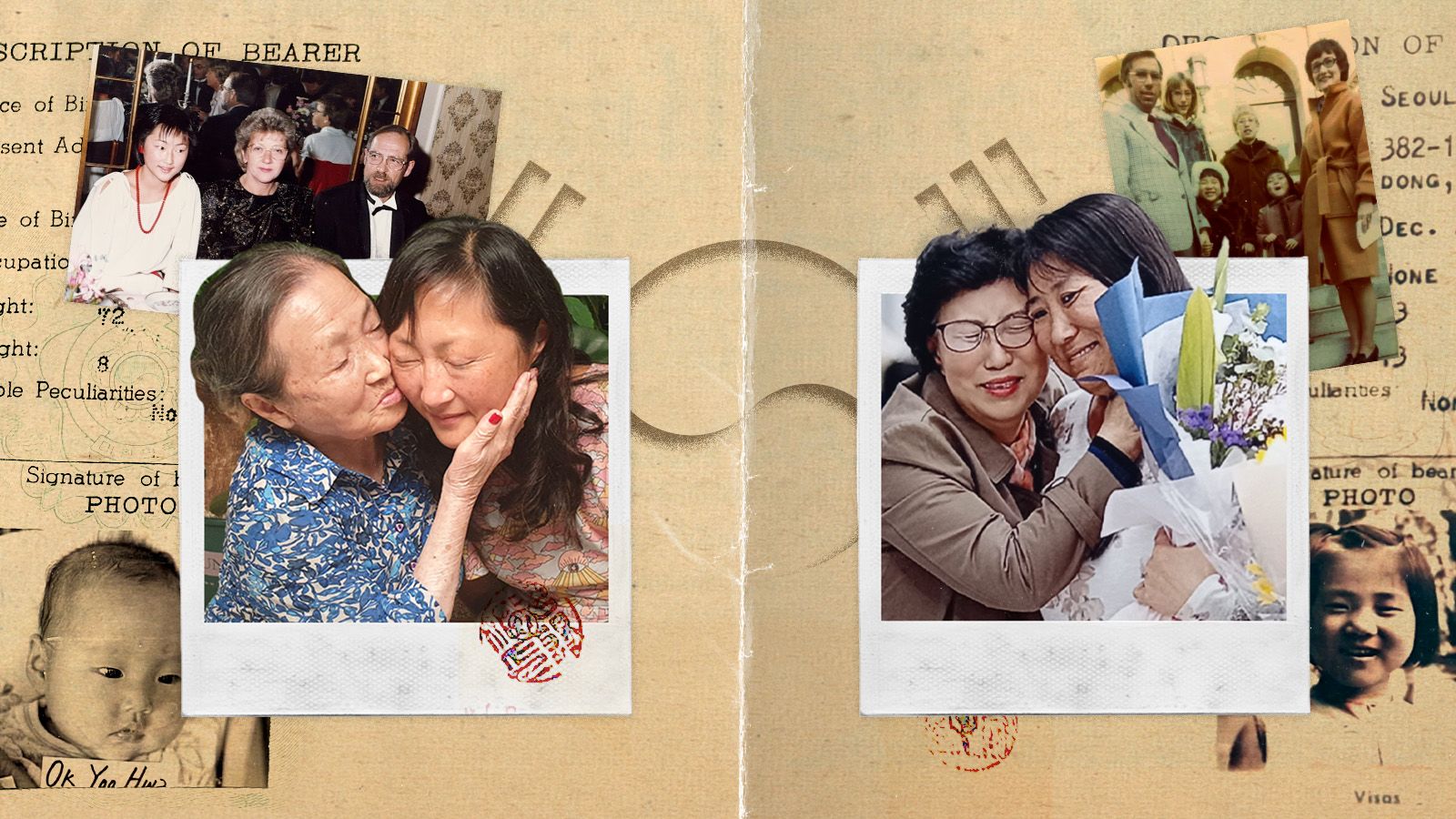
Korean adoptees in the US and Europe are finding their families. Reconnecting is much harder | CNN

Illustration by Leah Abucayan/CNN/Courtesy of Marianne Ok Nielsen and Han Tae-soon

(Left) Marianne Ok Nielsen reunites with her mother. (Right) Han Tae-soon meets her daughter after 44 years apart.

SeoulCNN — 

Marianne Ok Nielsen never wanted children, or a family of her own. She used to tell friends she didn’t feel worthy of that kind of life.

Saastamoinen (European COM): Hague now included in acquis

We consider it essential to promote largely the accession to the 1993

Hague Convention on inter-country adoption. Already 26 out of 27

EU Members States are parties to the Convention; we would urge the

remaining one to accede also. Furthermore, we have included the !993

Convention to the international framework that is important for the

No fundamental right of Indians to adopt US citizen child of relative: Bombay High Court

The bench also refused to exercise its extraordinary jurisdiction to allow the adoption and said there is no "fundamental right" of the petitioners to adopt an American child.

Mumbai: An Indian does not have the fundamental right to adopt a child of American nationality even from among relatives when the child is neither "in need of care and protection" nor in "conflict with law", the Bombay High Court has said.

A division bench of Justices Revati Mohite Dere and Neela Gokhale on Wednesday refused an Indian couple's plea to adopt their relative's son, who is a US citizen by birth. The child in the present case does not fall within the definition of either 'child in need of care and protection' or a 'child in conflict with law' as per provisions of the Juvenile Justice (Care and Protection of Children) Act and Adoption Regulations, the HC said.

"There is no provision in the Juvenile Justice Act nor the Adoption Regulations providing for adoption of a child of foreign citizenship even between relatives unless the 'child is in need of care and protection' or a 'child is in conict with law'," it stated

The bench also refused to exercise its extraordinary jurisdiction to allow the adoption and said there is no "fundamental right" of the petitioners to adopt an American child. 

Neither is there any violation of any fundamental right of the child of American nationality to be adopted by an Indian citizen, it added. 

The couple will have to complete all necessary formalities of adopting the child from the US as per American laws and procedure, only after which they can go ahead with the post-adoption procedure in terms of bringing the foreign child adopted to India, the HC said. 

The couple sought to adopt their relatives' child, who is a citizen of the United States of America by birth.

The strange case of Susan and the baby that wasn’t hers

Last summer, when “Susan” landed at Gatwick Airport from Nigeria with a newborn baby in her arms, she expected to return quietly to her family life in West Yorkshire. Instead, she was arrested on suspicion of child trafficking. Now, her name sits at the heart of a disturbing Family Court case that has exposed one of Nigeria’s most insidious exports: baby farming.


According to BBC, Susan, whose real name has been withheld to protect the child at the center of the case had been living in the UK since June 2023 with her husband and other children. She worked as a care worker and had legal residency. Before leaving for Nigeria, Susan told her GP she was pregnant. There were no signs of pregnancy, and blood tests revealed a tumor and not a baby. Despite doctors’ concerns, she refused further treatment and clung to an unlikely story: her pregnancies had always been undetectable, and this one was no different.

In June 2024, she left the UK, claiming she wanted to deliver the baby in Nigeria. Weeks later, she returned with an infant girl, “Eleanor.” But the narrative she spun quickly fell apart.

When DNA tests showed no biological link between the baby and either Susan or her husband, her explanation pivoted: it was an IVF baby, she claimed, that is conceived with donor egg and sperm. To prove her story, she submitted shaky documentation: a forged IVF record and a suspicious birth certificate from a Nigerian hospital. The accompanying photos, taken in what appeared to be a delivery suite, were blurry and inconclusive.

The woman in them was faceless. One photo featured a naked woman with a placenta between her legs. “Someone had given birth,” said the Nigerian doctor who signed the document. “It just wasn’t Susan.”
Thousands of adoptees were never given US citizenship. Now they risk deportation

Shirley Chung was just 16 months old when an American family adopted her from South Korea in 1966.

She was raised by a Black family in Texas, went to a mostly white school and attended a mostly Black church. Growing up in a mixed-race family, she became accustomed to questions about her identity.

“'What are you? What are you?' I’ve heard that my whole life,” she said. “From when I was a little girl, and my mother would have to answer the question.”

But one thing she never questioned was her identity as an American.

That is, until she misplaced her Social Security card and tried to get a new one. She was 57 at the time.