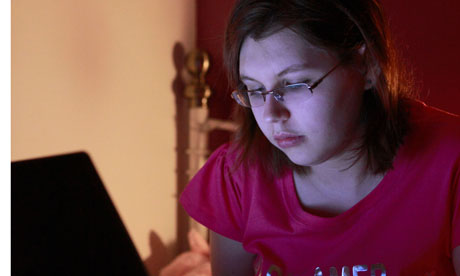
Teenagers are receiving the messages without knowing the background to their adoption. Photograph: Dave Parker / Alamy/Alamy
The natural parents of adopted children are increasingly using Facebook and other social networking sites to track down their offspring, flouting the usual controls and safeguards.
Adoption agencies are reporting huge numbers of calls from "deeply distressed" adoptive parents whose children have been contacted out of the blue.
Jonathan Pearce, chief executive of Adoption UK, said it was having to deal with the consequences of this "intrusive and unplanned communication", and warned that it was becoming more difficult to guarantee confidentiality to adoptive parents and their children.
At the moment, official contact in adoption is most often made through the "letterbox" process. The adoptive parents send the birth family a letter and photos every year via a social worker or adoption agency intermediary. If the birth parent wants to respond, they also have to go through this route.
However, Facebook and other social networking sites have changed all this. Any scrap of information – a name, location or date of birth – can help biological parents track down their children.
But the agencies warn that the existing rules protect often extremely vulnerable children. Where once adoption tended to involve a young, single woman giving up her unplanned baby, now two-thirds of adopted children have been removed because their parents abused or neglected them. In many cases, the birth parents dispute the removal, blaming social services. One message sent to a child given up some years ago for adoption read: "Hello, I'm your birth father. I have been searching for you ever since you were stolen by social services. You look beautiful. I love you so much."
Another read: "Darling son, I am so happy because I have found you here. I have been looking for ages. Please write back because you've been told lies about me." Many local authorities are now advising adoptive parents not to include photographs in their annual letters, in case these are posted online in an attempt to trace the child.
In a report to be broadcast on Channel 4 News tonight, one adoptive mother said a message to her daughter from the biological mother had had a catastrophic impact on the family. The adoptive mother, who cannot be identified, said: "Our daughter, who is our prime concern, has gone from no contact from her birth family, at the hands of whom she had a difficult start in life, to suddenly finding they are there at the press of a button."
Her daughter had just turned 16 when she received the message in February. She is due to sit her GCSEs shortly, but her adoptive mother said she had gone through a whole range of emotions and that it had "completely thrown her".
The natural mother failed to acknowledge why her daughter had been removed from the family at the age of seven. "She was subjected to abuse and neglect over a long period of time," said her adoptive mother. "But none of that is being acknowledged now."
In another case, a teenage girl was contacted by her biological mother who, in turn, put her in touch with her birth father. The girl was unaware that the man had sexually abused her when she was a young child. The report also cites the case of the adoptive father of one teenage boy who went to meet his birth father after contact was made through Facebook. The boy had been removed from his family because of severe physical abuse when he was a baby.
There are no reliable estimates of how many children have been contacted using social networking sites. But agencies are so concerned that next month the British Association for Adoption and Fostering is to send out new guidance to social workers and adoptive parents.
Dr John Simmonds, the BAAF's director of policy, research and development, said the guidelines recognise that Facebook and other social networking sites are here to stay. "We will have to build them into the fabric of our adoption practice and re-emphasise the importance of children knowing why they were placed for adoption and the circumstances of the birth parents," Dr Simmonds said. "There is nothing we can say to the social networking sites."
Chris Smith, whose children were adopted seven years ago, said he uses social networking sites to "follow them through life", although he has not sent any messages. Smith, who believes his children were unfairly adopted, said he wanted to know about their wellbeing. The annual letter does not tell you about their health or interests, he said.
"Because I know where they are, I can just sit and see some of the photos of their school and of events and know they are doing OK," he explained.
Some agencies now ask birth parents to sign contracts prohibiting them from using social networking sites to make contact. The adoptive mother to whom the Observer spoke said that when she contacted social services for advice they told her to stop their daughter from using social networking sites. "I told them that I did not believe I could do that because she would run away. I can cut back some contact, but not all," she said.
Normally the girl would not have been able to meet her biological family until she was 18. Because of the unexpected contact, her adoptive family is being forced to explore the option of a formal meeting with the birth parents. The mother said this was "far from ideal", but the "genie was out of the bottle".
? Facebook is expected to introduce changes to its privacy settings as early as this week following attacks by regulators and campaign groups, who claim it has failed to ensure users' privacy.
Those briefed at Facebook's headquarters in the US say the company is to introduce a "master control" that would simplify users' privacy settings. Users would then be able to choose which groups of people they wished to share information with – everyone, friends of friends or just friends. This would replace the current automatic system that shares users' information with third parties and has been criticised for being over-complicated and confusing.
For the full report see Channel 4 News tonight at 6.30pm


